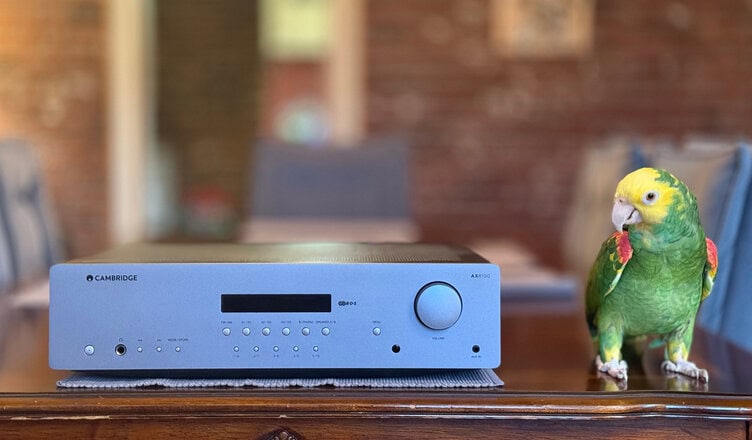
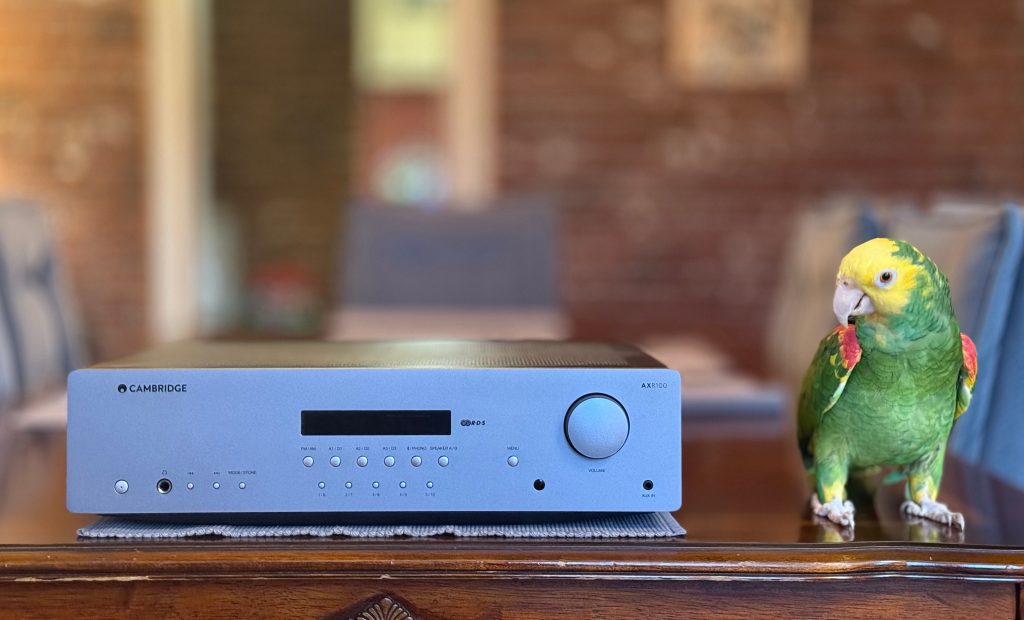
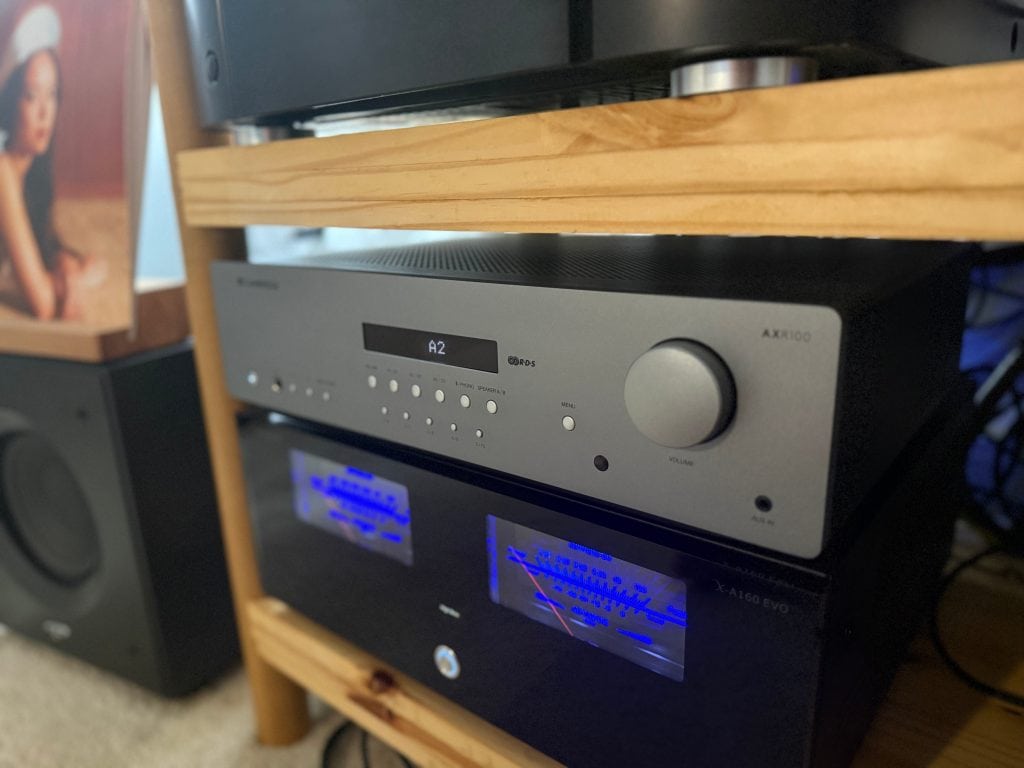
The fine folks over at Fidelity Imports sent over a Cambridge Audio AXR100 along with the Opera speakers we just reviewed. The AXR is a budget-friendly 2-channel receiver with quite a few built-in features such as a Phono Stage, DAC, Bluetooth, and AM/FM Tuner. If you are curious why this is a receiver and not an integrated amplifier, the tuner section is what usually makes that distinction. The AXR100 comes in at a retail price of $699.00, making it well within reach for alot of audiophiles looking for perhaps their first hi-fi setup or even a seasoned listener looking for a simple secondary or tertiary system. With just about everything you need other than speakers built in, it could make for a great simple setup, so let’s see how well it does.
Setup
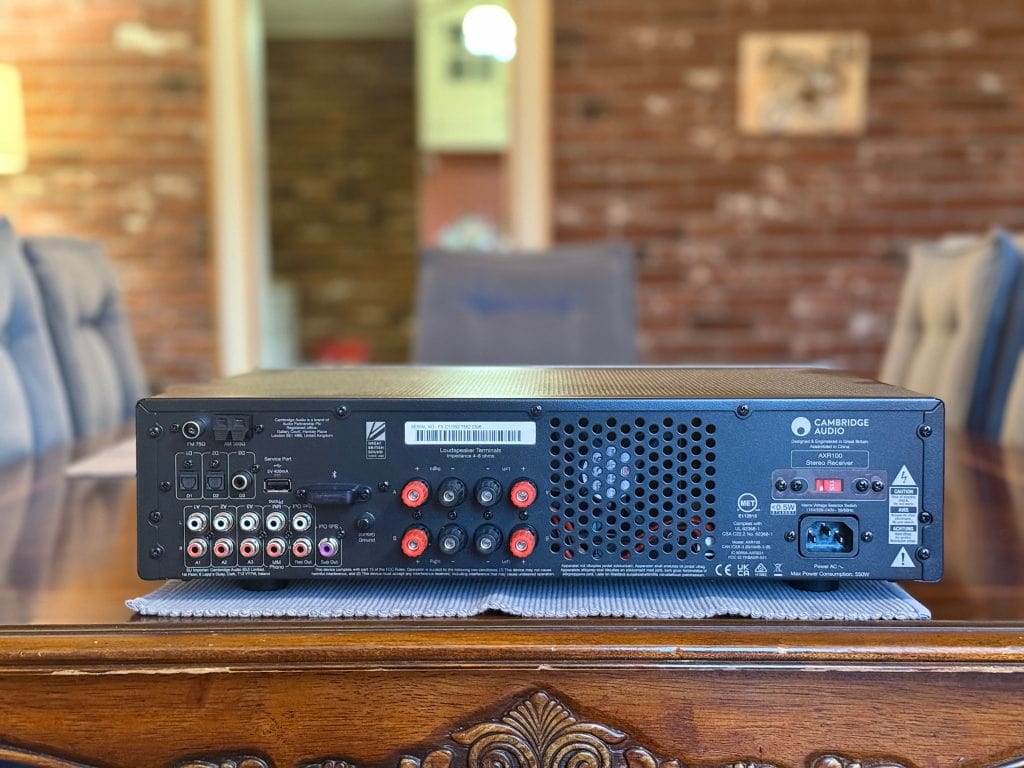
Setup on the AXR100 is incredibly simple. Once out of the box, you will have your power cord, user manual, antennas, and the unit itself. If you plan to use the radio, you will need to hook those up as well as whatever sources you plan to use. There are two sets of speaker terminals in the back, an A and B set, so you could power two sets of speakers at the same time or opt for only one or the other. You will also find a subwoofer out. Once all your cables are plugged in, you are ready to fire it up, and it’s pretty much ready to go. There are some simple bass/trebble tone controls you can change to your taste. Again, you have a little more setup if you want to use and program Radio presets. Since I am not a Radio listener and I am not keeping this amp, I didn’t save any presets.
Sound
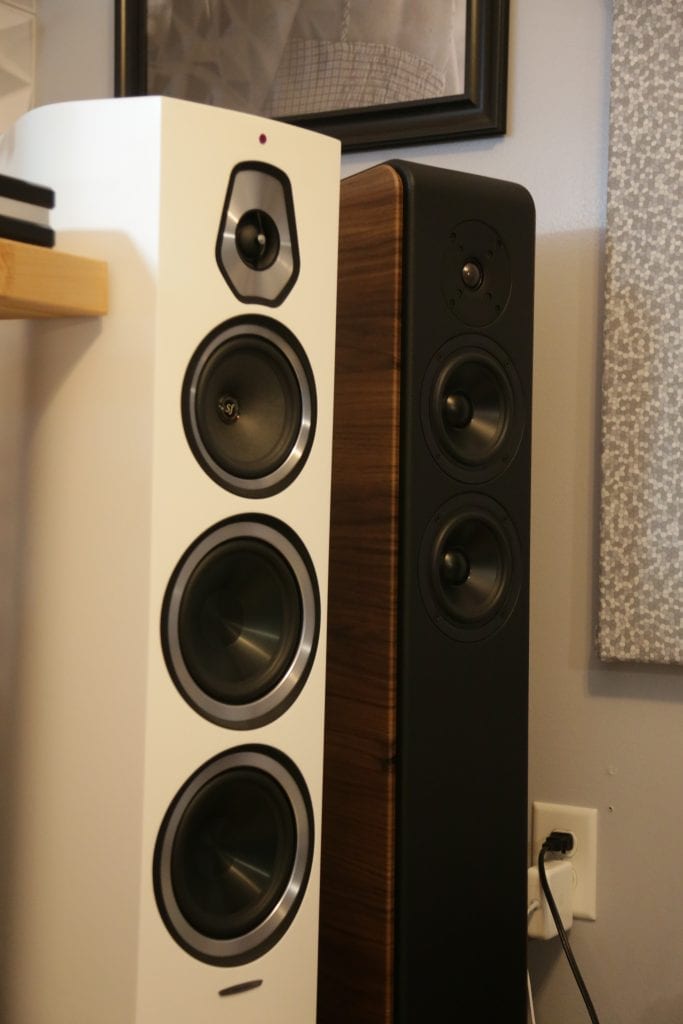
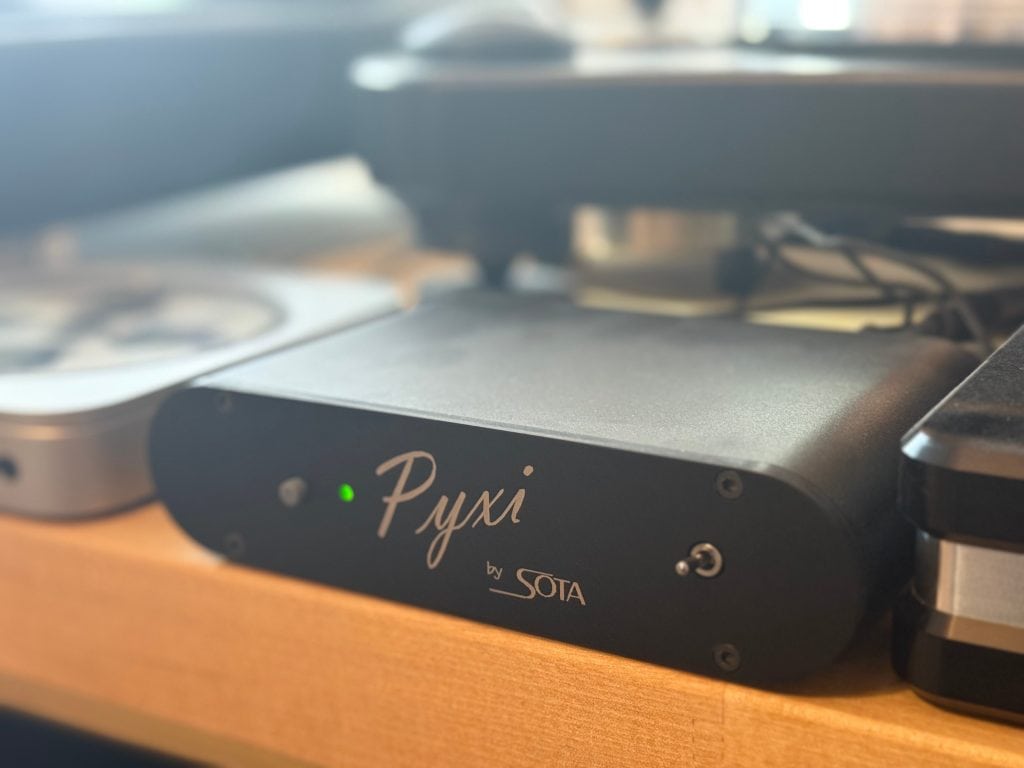
I used the AXR100 to power a couple differnet pair os speakers: my Sonus Faber Sonetto Vs and the Opera Loudspeaker Grand Mezza V2s. As for sources, I used my Rotel CD11, McIntosh MB25, and my VPI Prime with the SOTA Pyxi phono stage. I also tried the built-in phono stage as well as the built-in DAC to compare it to separates.

I was pretty happy with the sound from the Cambridge AXR100; it offers a lot for the money in both conectivity but also the sound. I have used quite a few receivers and integrated amps over the years, from older Yamahas to more modern ones including offerings from Rotel, Advance Paris and more, and in the world of sub-1000-dollar amps, you are usually making compromises in some way, be it features, connectivity or sound. My preference will always be to get fewer features if I have to pick something to give up to hit a price point. The Cambridge seems to fall into this category. You get pretty good connectivity, with several analog and digital inputs as well as AB speaker outputs. Though one thing missing for me is a pre-out for a separate power amp, which would make this a great beginner piece you can grow with. While you don’t get a ton of customization settings, you do get basic tone controls and an out-of-the-box sound that is more than good enough for the money.
The AXR100 has more than enough power to get most speakers up to reference listening levels. I was more than happy with the output levels with both the speakers I used for testing. That said, the extra power from my Advance Paris 160 did help push the 4 8″ woofers in the Sonettos with more ease. The power from the AXR100 was also pretty clean up to the levels I usually listen at with no real distortion, though with some bassy tracks it could get a little muddy at times. The mids and highs stayed clear and detailed. The difference in bass clarity can also be attributed to the damping factor, as the Cambridge is rated as >50, while the Advance Paris is rated as >600. I will say that with the Opera Grand Mezzas, the difference in bass was smaller, and with the smaller woofers, this makes sense. I think if you get too overzealous with what speakers you pair with it, you may be pushing it beyond what it’s really made for.
Overall, the AXR100 does a good job with any type of music. As you probably know, I play a little bit of everything, from classical to jazz to metal, rap, and indie. At no point did it break down and sound like it was struggling with any genre of music. It does fairly well with anything, sort of a jack of all trades. The power section has enough speed to keep up with anything you throw at it, but also enough finesse to make singer-songwriter music sound great too.
It can be difficult to make good midrange products. When you make flagship gear, it’s fairly easy to just make everything the best you possibly can, and budgets usually don’t matter, so build cost doesn’t matter as much. Making cheap stuff is also pretty easy: just buy the cheapest components possible, literally, farm it out to the cheapest manufacturing plant, and sell it cheap. Making good value mid-range products is harder: what do you cut out to keep cost low, what do you spend on to keep quality and features that justify the price point? It becomes a game of balance, and the AXR100 does a pretty good job at holding that balance. You get just enough features to make this a great all-in-one receiver, a pretty good build quality, and decent power output. Things like the buttons, knob, and screen are not super premium, but I would rather have a basic display and good sound than a high-res touch screen and mediocre sound. Cambridge put money in places that really mattered while also making an amp that is nice enough to look at and interact with. The UI is super intuitive and simple, making this an easy piece to get into HiFi with.
DAC
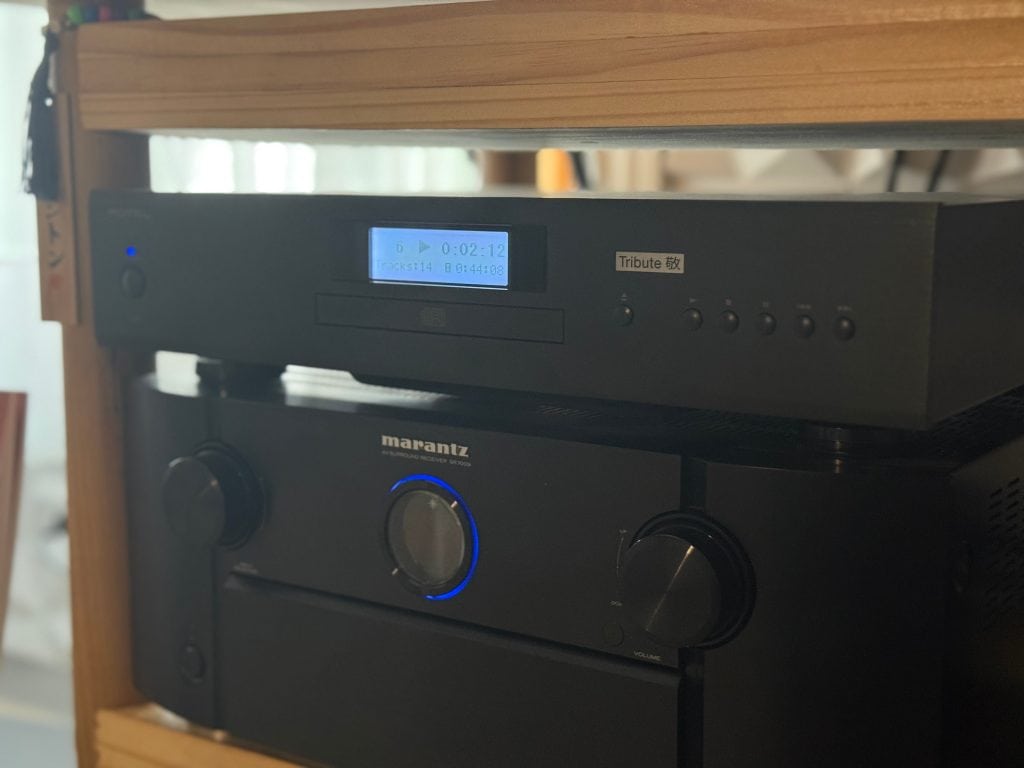
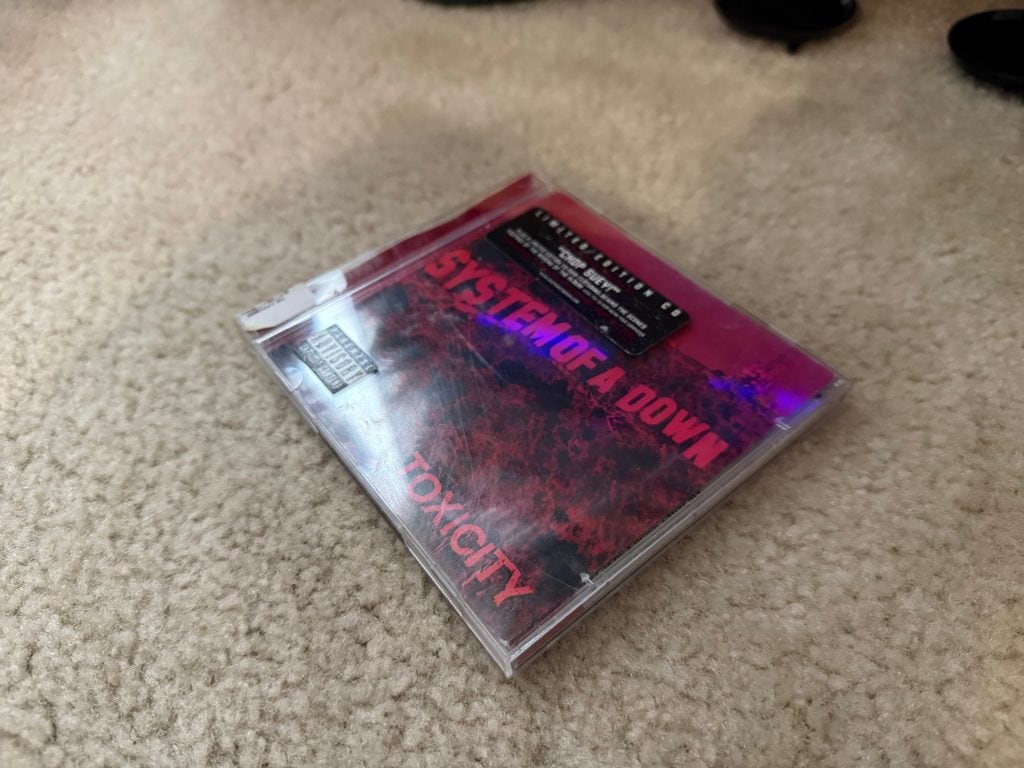
First up, I left my Rotel CD11 connected to the Torc DAC and played a few albums, then used the same coaxial cable to connect it to the AXR100’s D3 input. I also tried the CD11 with its analog output to compare both the Cambridge’s and Rotel’s on-board DACs. For my comparisons, I used “Chop Suey” off of System of a Down’s Toxicity album. As I said first up, I ran the CD11 into the Torc DAC, then into the AXR100. I took note of how it sounded, the stage, imaging, tone, and level of detail. After a few listens, I connected the CD11 to the coax input on the AXR100 and listened again a few times, and then finally used an analog connection and again took note of the sound. My overall preference was with the Torc DAC, and this is not a surprise to me as I speced the DAC out in the Torc to what I liked. The real comparison here is between the CD11 and the AXR100. Which is probably also a more realistic comparison, as I doubt too many people will be using a 4-figure DAC with this receiver. That said, you can get a little more out of both the CD player and the Cambridge with an outboard DAC.
With the AXR handling the DA conversion, the sound was pretty neutral in terms of overall tone. The detail level is perfectly adequate for a pairing at this price range. It’s not as good as the Torc, but both of the the AXR100 and CD11 could be had for only a couple hundred bucks more than just the Torc, so it’s not terribly surprising. The overall sound quality is more than good enough for me to be happy with how much I would have spent on the combo. You get plenty of clarity to enjoy the music. The sound stage also has decent depth and width. I would say the built-in DAC is pretty nice for the price point, and you can always move to an outboard unit later, but to get you started, it will more than do the job,
Lastly, I let the CD11 handle the DA conversion. The CD11 DAC has pretty good detail throughout the frequency range, offering pretty clean bass, mids, and high notes. The sound stage again has decent depth and width, and imaging is good as well. To me, it is better than the AXR100’s built-in DAC but not drastically so. As for tonality, I would say the CD11 leans warm, but not a ton. If we use a scale from -10 to 10, with 0 being neutral and 10 being the warmest gear I have heard, I would put it around 1-2. So tonally it sounds more mid- and bass-forward. I am a fan of a warmer sound, so in this category I prefer the CD11’s DAC over the more neutral AXR100, but that is more of a matter of taste than an objective quality difference.
I liked the DAC in the Cambridge; it does well and offers a good sound, making it so you can connect a digital source right out of the box with no additional gear. Hooking it up to a TV via an optical cable will vastly increase sound quality over the built-in audio of your TV.
Phono Stage
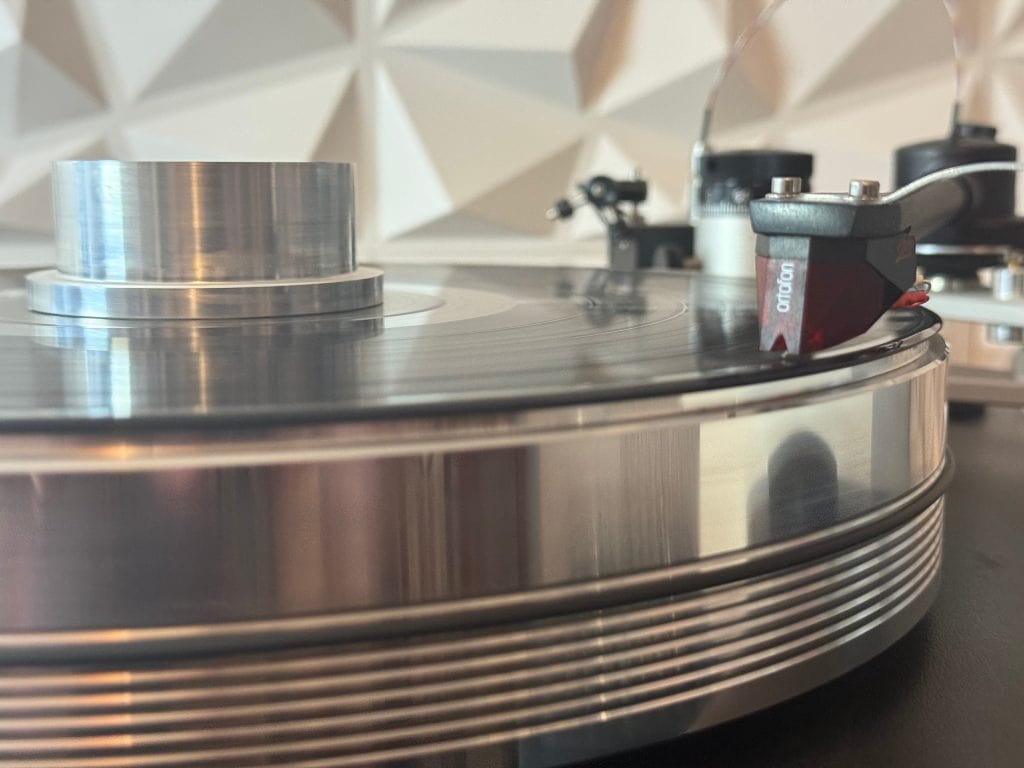
The AXR100 has a built-in MM phono stage so you can hook up a turntable without the need for an external phono stage, or to bypass a built-in phono stage in your turntable, if it allows that. Many entry-level turntables have a built-in phono stage so you can plug them into any receiver or powered speaker, and a lot of them allow you to bypass the built-in option so you can use a better external option. I do not currently have one with an included phono stage, but I will be trying out the budget-friendly SOTA Pyxi and a 2M red Cartridge on my VPI Prime and seeing how the onboard phono sounds in comparison.
For my comparison album choice, I went with Perception by NF. It’s a very dynamic album with some great instrumentals that can be very demanding of your system. The tracks that use a choir backing have a very deep stage, and getting that depth really adds to the impact of the album. I used my Pyxi first as it was already hooked up, and as I mentioned, I used a 2M red cartridge as it is the only MM I have on hand at the moment. The Pyxi sounds pretty good as an MM phono stage, but the MC side of it is where I really prefer it. I think it just shines more with MC cartridges, though this could also be a bias I have for MC carts in general. The 2M red actually sounded a little veiled with the Pyxi. Higher notes didn’t quite shine as much as you would want, and there was a lack of airiness. The album as a whole sounded a bit flat and distant.
When I switched to the Cambridge’s phono stage, everything opened up quite a bit. The top end got more space and brightened up. The depth of the sound stage also got better. There was more detail and better tonal balance. I tried a couple of tracks with the Quintet Red and the Pyxi, and in that case the Pyxi really did well, though I can not do a direct comparison with an MC cart, so I can’t really use this in the comparison. Ultimately, I think the 2M Red just pairs better with the Cambridge. This is also great to know as it is such a popular cartridge, especially on similarly priced turntables. That said, the Blue should also do really well with the Cambridge as it is similar in tone but is more detailed. The AXR100 has a genuinely impressive phono stage; usually these are just included to tick a box, but this is a really well-done integrated MM Phono stage.
To wrap up the sound section, I played some Spotify through the included Bluetooth receiver and played a wide variety of tracks, looking for any chinks in the armour, so to speak. The only weakness I found was that heavy bass with bigger speakers at louder volumes can push the power section a little too hard. And to be honest, this really isn’t a negative; it’s more so an example of not really using a piece of gear for its intended purpose. But it’s good to know the limits of anything, to make sure you pair your electronics with other gear so they will play well with them regardless of the level you’re at. Ultimately, I really like the Cambridge AXR100, and for less than a 1000 bucks it is a compelling offer.
Pros and Cons
Pros
- Good Sound
- Good Connectivity
- Built-in Phono
- Built-in DAC
- 2 Sets of Speaker Outputs
Cons
- Would like Pre-outs
Specs:
POWER OUTPUT
100 watts (into 8Ω)
THD (unweighted)
<0.01% @ 1kHz, 80% of rated power <0.15% 20Hz – 20kHz, 80% of rated power
Frequency response (-1dB)
5Hz – 50kHz
S/N ratio (ref 1W)
>82dB (unweighted)
Input impedances
47k ohms
Power Amp damping factor
>50
Standby power consumption
<0.5W
Max. power consumption
550W
Bass/Treble controls
Shelving, ultimate boost/cut +/- 10dB @ 100Hz and 20kHz
Subwoofer output
200Hz 2nd order L+R Level follows volume setting
Digital inputs
PCM 16-24-bit S/P DIF Co-axial 32-192kHz TOSlink Optical 32-192kHz
Dimensions
110 x 430 x 340mm (4.3 x 16.9 x 13.4”)
Price: $699.00 U.S.
Associated Equipment
- Marantz SR7009 (preamp)
- Advance Paris X-A160 Power Amp
- CD11 Tribute CD Player
- VPI Prime with Ortofon 2M Red
- SOTA Pyxi Phono
- Geshelli Labs Torc DAC
- AudioQuest Forest Cables
- AudioQuest PowerQuest 3
- Prosper Cables Speaker Cables
- Sonus Faber Sonetto V
- Opera Loudspeakers Grand Mezza V2
- Paradigm Defiance V8 subwoofer
- Synergistic Research Foundation SX Cables
- Synergistic Research PowerCell 8
Conclusion
The Cambridge AXR100 is an excellent entry-level receiver that offers good power, good connectivity, and really good sound all for 700 dollars. I truly enjoyed my time listening with it and would be more than happy to recommend it to a buddy audiophile looking for a comprehensive amplifier. It has everything you need to start your Hi-Fi journey, with a built-in DAC and Phono that actually sound good and aren’t an afterthought. The only thing I would love to see would be Pre-outs so you can always add a more powerful amplifier later on and use it as a great preamp. Otherwise, for the money, it’s a really good option to audition.
For more information on Cambridge and where to buy, click the link below:
https://www.cambridgeaudio.com/usa/en/products/hi-fi/ax/axr100
For American Distribution, check out Fidelity Imports below:
Disclaimer:
Fidelity Imports supplied Hifi Chicken with a Demo AXR100 for the purpose of this review. Fidelity Imports nor Cambridge nor any affiliate paid in part or in full in exchange for this review.