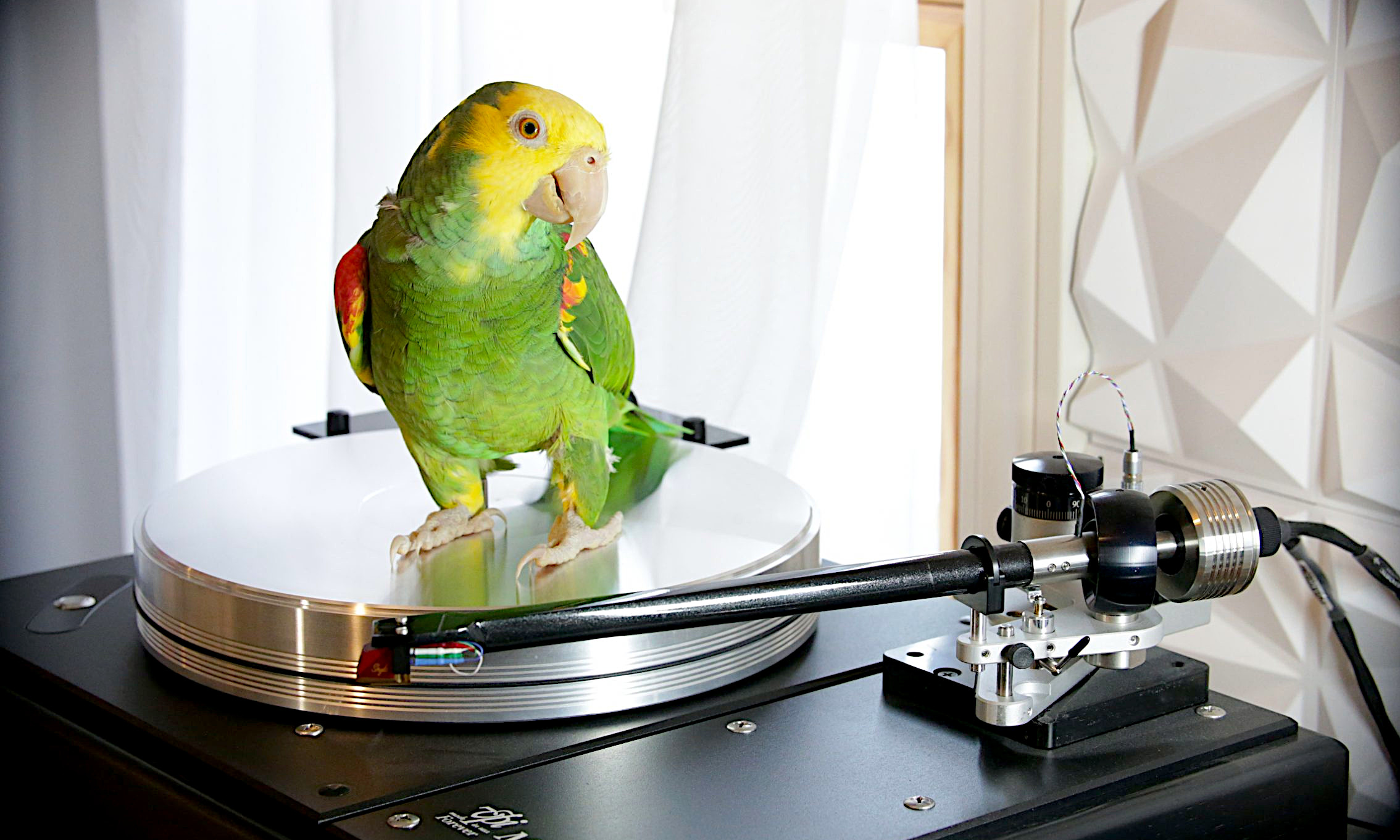
Among the many things that came back with me from Capital Audiofest was the 12″ Fatboy Tonearm from VPI. I have to say Mat was very excited to have my mount this thing on a Model One as it seemed so absurd at the time. Who would put a 12″ Fatboy on a Model One? The answer is Mat, and I would, and maybe you next. The Fatboy is the flagship VPI tonearm line offered in a variety of lengths to fit whatever table you are putting it on, with the 12″ being the longest option. The Fatboy 12″ comes in at a retail price of $3900.00 U.S., meaning it is not cheap, and with the VTA base cost as much as the table I put it on. So let’s see how it does, and if Mat and I are actually crazy or not.
Setup
I can not talk to the packaging and unboxing experience you may have, as my 12″ Fatboy came home with me in a Busch Light box, if I remember correctly, it may have been Bud Light. But that is neither here nor there. I have opened up and also packed up a lot of VPI products over the years, and I promise they normally are packed very, very well and will get to you safely. But in the excitement of a show like Capital Audiofest, sometimes you have to do what you can since the arm arrived at the show mounted to a table.
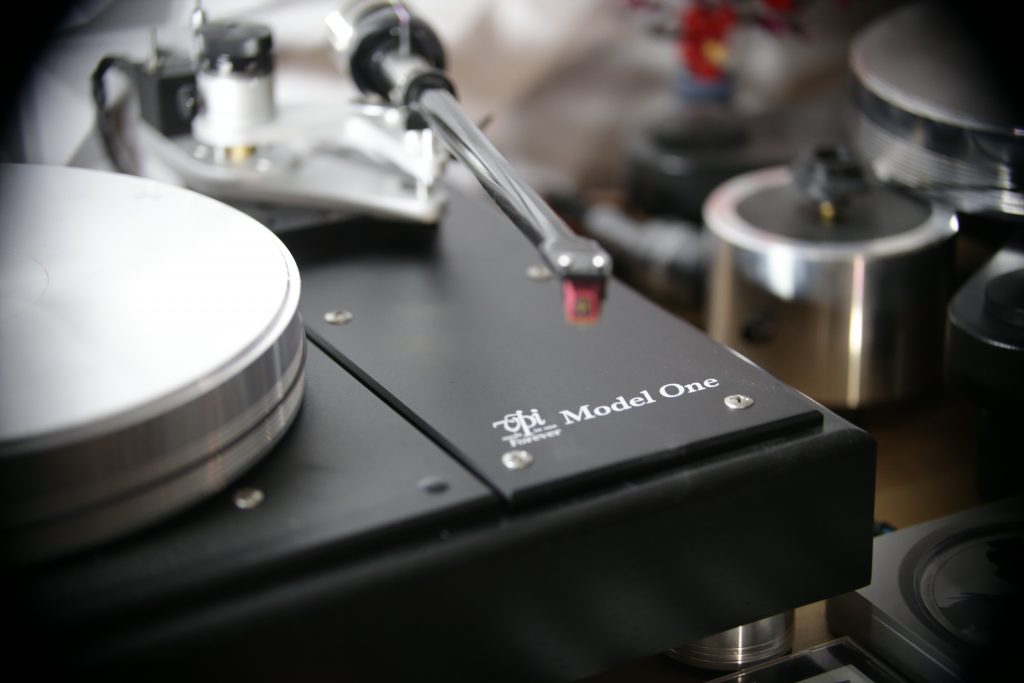
Now, most of the setup was done for me by the wonderful Mat while at Capital Audiofest, as he got the brilliant idea to try it on a Model One in the middle of the show, so when I brought it home with me, it was already mounted on a tonearm plate and set at the correct height. Though if you were to buy one for your system, all you need is the plate, tonearm, and base, and they are all very easy to assemble and install on a Model One, probably easier than most any other table. I did have to mount the Shyla Cartridge and align it as well as set tracking force, which is super straightforward if you’ve ever done it before on any other arm. Once aligned, I just had to screw the weight to the right position to achieve my tracking force of around 1.8 grams. I did play with the tracking force within the recommended range of 1.6 -2.0 grams and actually settled closer to 1.9 grams.
Sound
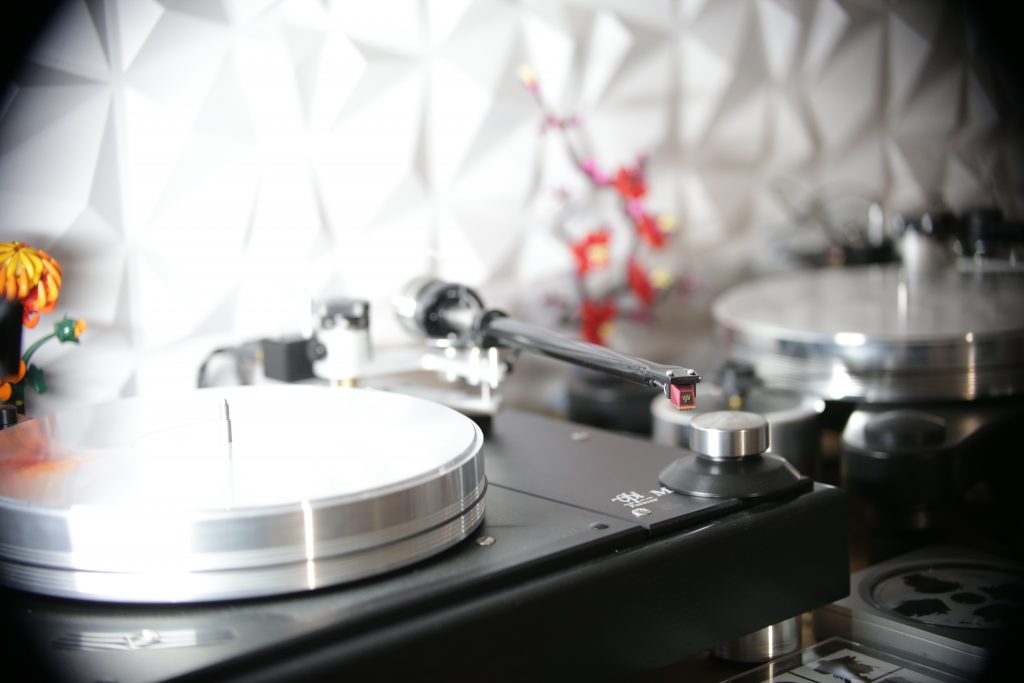
The Fatboy is one of those products where we are looking for almost a lack of sound. When it comes to tonearms, you want it to interfere in the sound of your system as little as possible. Ultimately, you want an arm that allows the cartridge to track as perfectly as possible to keep the sound pure. You want something that will be rigid and something that will not vibrate to influence the sound. Generally speaking, when you are looking at any tonearm that is not in the Linear Tracking family, the longer the better, as with a longer arm, your cartridge stays closer to tangent throughout the arc. Now too long and you can start getting into mass issues. So you want to balance length, mass, rigidity, and harmonics. The Fatboy I have on the Forever Model 1 is 12″ long, which is usually the sweet spot for a tonearm. I have used 9″, 10″, and 12″ tonearms on a variety of tables, and for me, 10″ is about the minimum I would personally purchase. That said, there are plenty of great entry-level tables with shorter arms that sound great for the money, but as you move up in performance and consequently price, you will likely find that you will prefer a longer arm.
After setting up the Fatboy, I played some of my favorite records to get a feel for how well it performed compared th to the S arm I had on the Forever Model 1, as well as comparing it to my 10″ uniupivot arm on my Prime. To be honest, the S arm is a great arm that leverages newer technology and design methods, but it is closer to an entry-level arm than the Fatboy. That said, I found the Fatboy to sound better, or rather, it let the Shyla cart sound better. The length led to better channel balance, especially at the beginning and end of the sweep, where they are at the furthest from tangent to the groove.
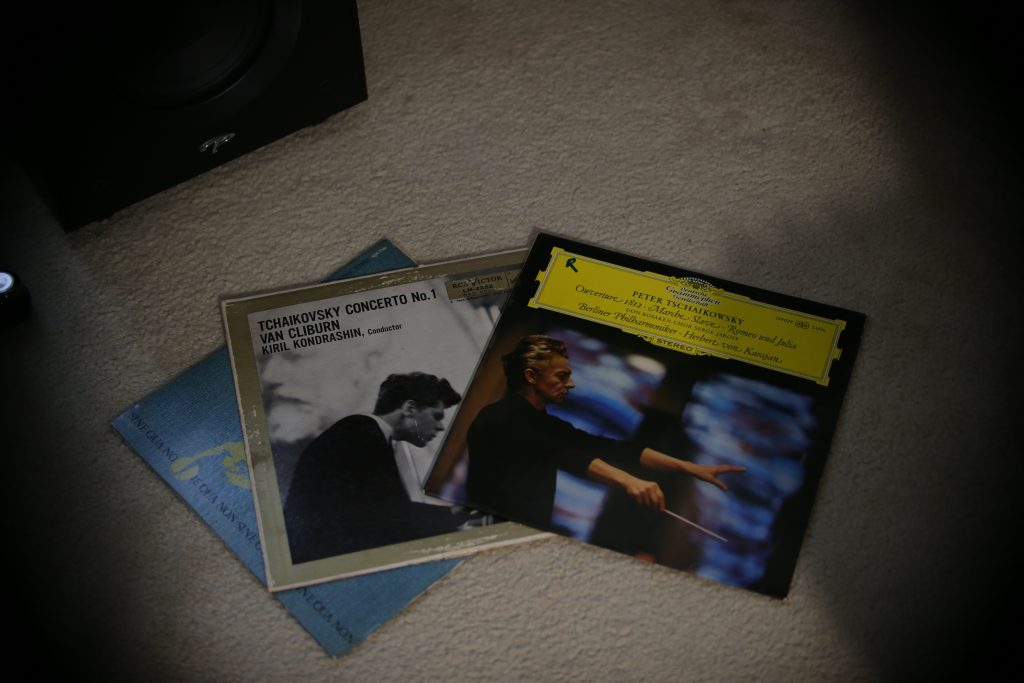
One of the first albums I played is one that has become a favorite, Ethel Cain: “Preahers Daughter”. My two favorite tracks are “House in Nebraska” and “Thoroughfare”. The build in both songs is so good, but even better is the world-building. I have said it before and will die on this hill, but Ethel Cains ablity to paint a scene in my head is simply unmatched. Part of my ability to build this virtual world is being so completely enveloped in sound. The Shyla and Fatboy combo on the Forever Model One is the best I have heard either song in my room. To me, this is what it’s all about. Sure, we all like shiny new gear, but when that shiny gear pays off, that’s when we get completely lost in the music and forget we are even listening to a stereo. Listening to this album on this system was an experience only rivaled by seeing her live. The world around me disappearing, and the stress of work, gone.
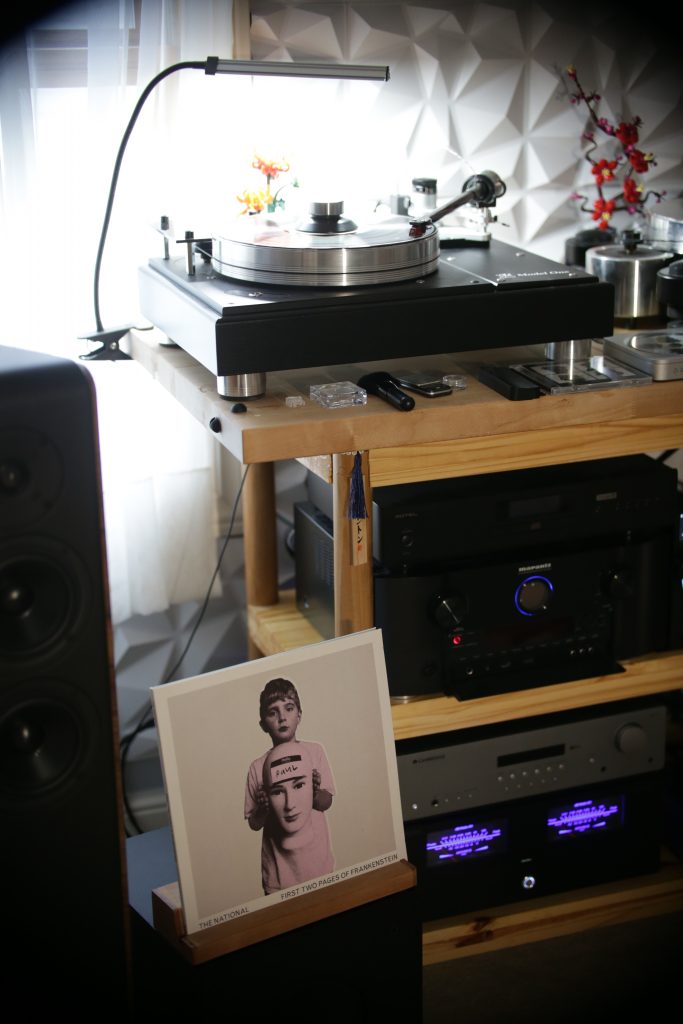
Another one of my favorites was up next: The National’s “The First Two Pages of Frankenstein”. The clarity you get with the Shyla cart mounted on the Fatboy is insane. The output of the total package is tonally neutral. The music is left alone and allowed to shine on its own. The vocals sound realistic with no veiling, which can make them seem soft or low resolution. Instrumentals have detail and edge that I don’t quite get with the S arm on the Model One. The S arm sounds good, don’t get me wrong, but if you have a system that can resolve the tiniest of details in the groove, the Fatboy will sound even better. The Fatboy allows for better separation on panned instruments, creating a more detailed and wider sound stage with more precise imaging.
I also own a lot of older records, all of which I have bought second-hand from all over. They are all in varying conditions, and many are far from perfect. They have scratches, wear, and some have some warp. This is the only time you may take issue with the Fatboy. It is not forgiving. You will hear that wear or damage even more than you may have before. Now, for me, this isn’t a deal breaker. A lot of the charm of vinyl is that it’s rarely perfect. I don’t mind when an old album is showing its age; it’s a testament to how good it is that all these years later, it is still getting played. For reference, listening while evaluating a piece of analog gear, I will always play my ultra-clean, perfect condition albums to really hear what’s possible, but I will always play some older, less-than-perfect albums. I want to know how a piece handles that as well, plus I just enjoy the music. The Fatboy, being a tonearm that allows such deep extraction from the groove, will, of course, suffer from also extracting the issues in the groove as well. Ultra-high-resolving analog gear can be a double-edged sword, but if you can embrace the history of your collection while also enjoying extremely clean and clear sound from your best recordings, then the Fatboy is a great tonearm.
As far as comparisons to other arms on the market that I have experience with in my system, the only fair comparison is the Wand Tone arm. Which is another great arm, and to be honest, I would be more than happy having either on my table. I think the VPI is easier to set up, but they both do a superb job. It’s hard to call one outright better than the other. I think the Wand is more rigid and, once set up, a dream to use. The Wand does have a little more effective mass, so that may be a consideration depending on your cartridge preference. When comparing it to my 10″ unipivot, the Fatboy is so much better. The extra length and the gimbal are, at least to me, preferable. Overall detail extraction is much, much better with the Fatboy, so you get overall better resolution and imaging.
Pros and Cons
- Perfect Length
- Rigid
- Smooth Sweep
- Completely adjustable
- Excellent Gimble
- Will expose any issues in your vinyl collection
- Integrated Headshell
Specs:
Bearing Type: Full Gimbal Bearing
Pivot to spindle: 300 mm
Internal Wire: Nordost Reference Wire
Effective length: 313.0 mm
Effective mass: 12.5g.
Overhang: 13mm
Offset angle: 17.37 degrees
Average RMS distortion: 0.267%
Material: 3D Technology Consisting of but not limited to Epoxy resin and Delrin materials, copper, aluminum and steel
Product Notes: Adjustable Drop Counterweight, Azimuth side weights, VTA, and Limo Connection.
Price: $3,900.00 plus VTA base as tested ($1,800.00)
Associated Equipment
- Marantz SR7009 (preamp)
- VPI Forever Model One
- VPI S Arm
- VPI Avenger Phono
- VPI Prime
- VPI 10″ Unipivot
- VPI Shyla Cart
- Ortofon Quintet Red
- SOTA Pyxi Phono
- Sonus Faber Sonetto V
- YG Cairn
- Opera Grand Mezza V2
- Starke Sound Beta5
- Mcintosh MC250
- Advance Paris X-A160 Evo
- Paradigm V8 Sub
- Starke Sound SW15
- Full Synergistic Research Foundation Loom
- Synergistic Research Powercell SX
Conclusion
It may seem a little silly to put a 4 thousand dollar tone arm on a 2 thousand dollar base onto a table that costs 5900 with a tonearm, but in reality, the Model One is such a good table, I think tonearms that cost twice as much would be just as at home as the Fatboy is. I may be the only person who has done it so far, but I think more folks should give this a try in their systems. It is not a cheap piece of gear to get, but if the rest of your analog system is up to the task, it could be the last tonearm you ever need to buy. It will let whatever cartridge you choose shine, completely unhindered, to get the most out of your vinyl collection.
For more information and where to buy, click the link below:
https://www.vpiindustries.com/?srsltid=AfmBOoodkJCRZegk73X4EkTbIBWEBkigR0JFKgBMmceGQmHXfdnRS9Px
If you are in Ohio, Sound and Vision is an Authorized VPI dealer.
https://www.soundandvisionohio.com


Disclaimer:
VPI provided Hifi Chicken with a Fatboy 12″ Tonearm for the purpose of this review; VPI, nor any affiliate, paid in full or in part in exchange for this review.