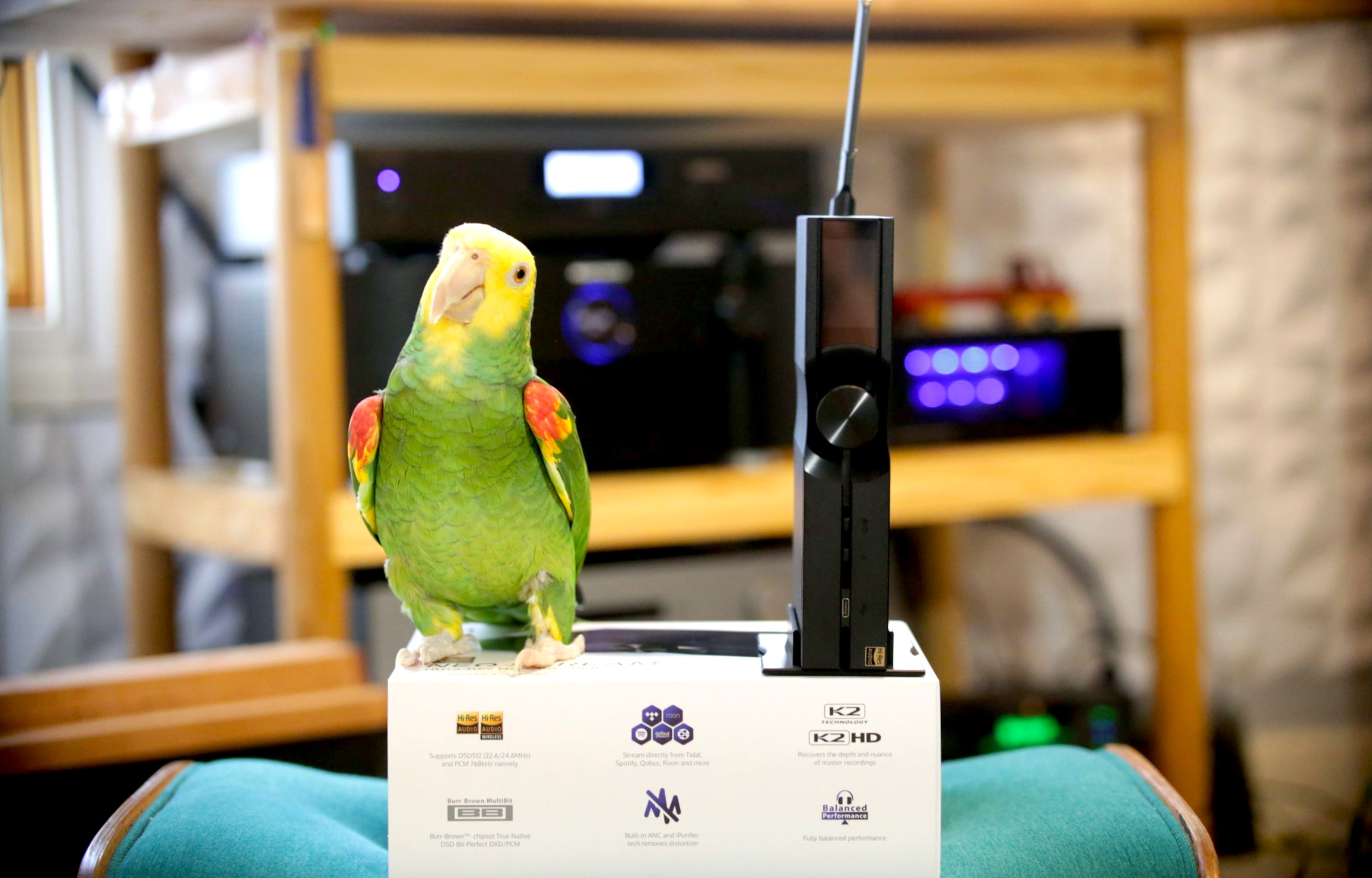
I have reviewed a lot of iFi products over the years, ranging from their entry-level to some of their flagship products. I even own a couple of their products. So far, I have loved everything they have sent over for review. iFi Audio offers a value in hifi that can be hard to find, great sounding products at prices most anyone can afford. Their Air line of products are some of the best entry-level options out there. Their flagship products also compete extremely well within and above their own price bracket, but when you have a grand to spend, the competition does get harder; there are a lot of good streamers to be had at that price point. The Neo Stream 3 is the latest in the Neo Stream line and comes in at a retail price of $999.00 U.S., and while it is not technically the flagship streamer, the Phantom is, it is their top-of-the-line dedicated streamer. The Phantom is a lot more, being basically a full high-end headphone system wrapped into one chassis. So what does the latest generation of Neo Stream have to offer and is it the right move for you? Let’s dive in and find out.
Setup
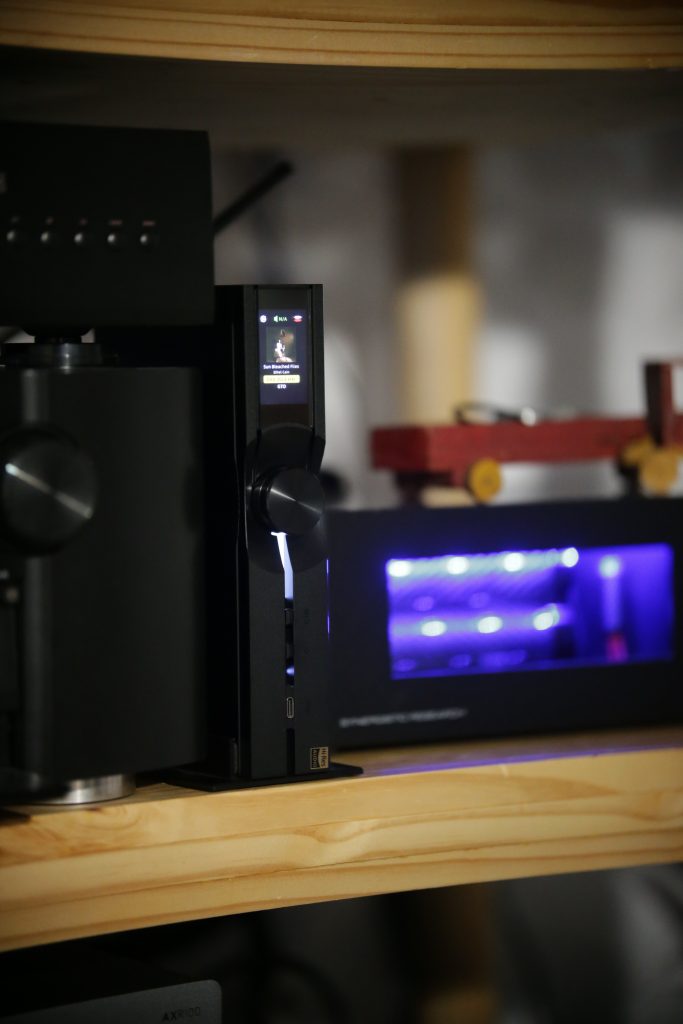
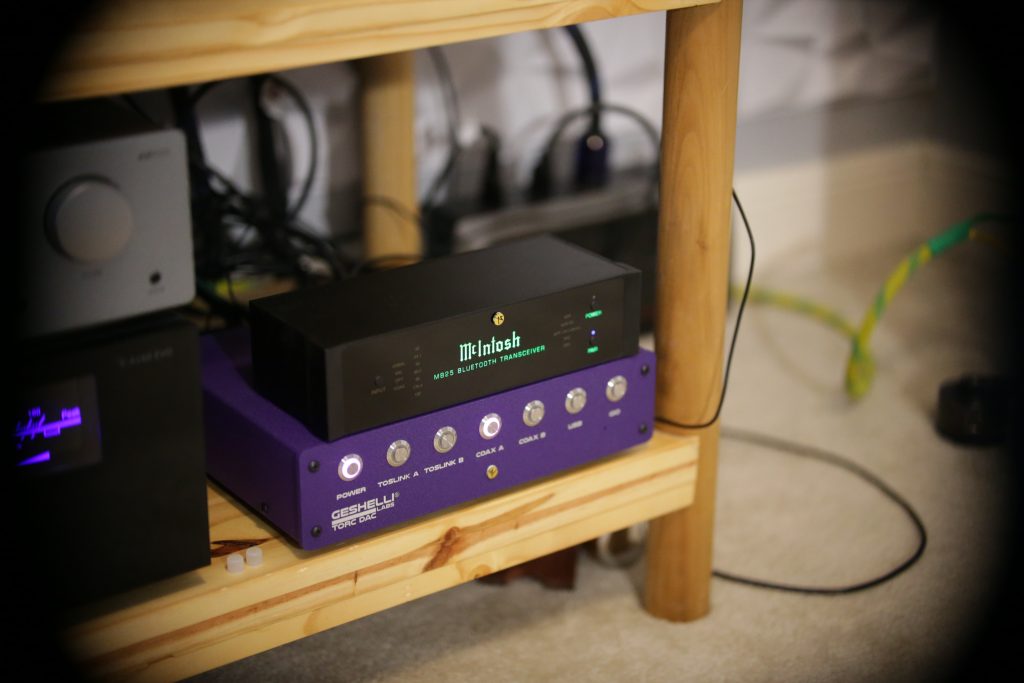
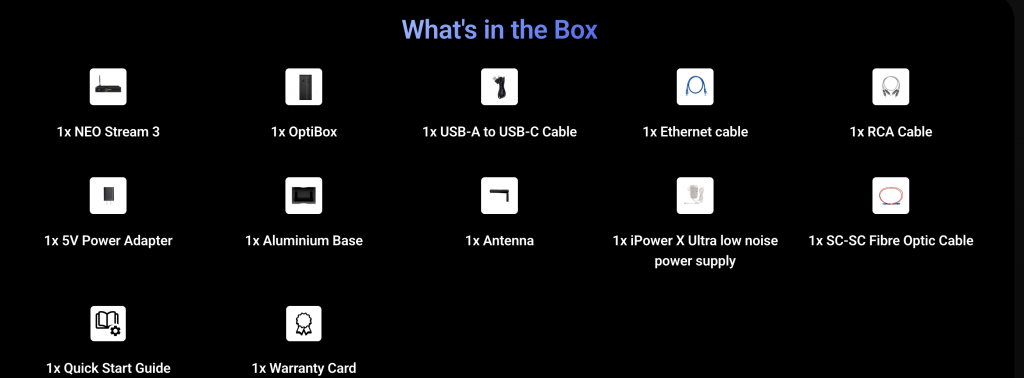
Setup can be fairly straightforward or a bit more complex, depending on how you want to use the Neo Stream 3. If you plan to set up roon, as well as use their app, you will have a little more time until you are ready to go. However, if you want to use Spotify Connect or Qobuz Connect, you can plug it in, connect to your network, and select it as your output as easily as that. I used the Ethernet to Optical connection for my network connection as it offers the best possible speed and a stable connection. If that is not an option in your system, you can use WIFI as well. You can use this as a transport as well, as it has digital outputs as well as the analog RCA outputs. I ran both Coax digital into my Geshelli Torc DAC as well as straight into my Marantz using analog. You just need to select which output you are using in the menu. You can also choose between a few filters, and I almost always use iFi’s GTO filter. The Neo Stream 3 also comes with everything you need to hook it up to your system, including the Ethernet to optical adapter and analog RCA cables, which I always appreciate. You won’t have to go buy anything else. As soon as it arrives at your door, you are ready to go.
I want to add that at one point, I did manage to softlock the Neo Stream 3 somehow. That said, I used their tech support like a regular customer, and they got me a firmware solution within a couple of days. I was able to install the firmware and get it up and going, and didn’t have any other issues after that. I’m not positive what may have caused it, but shoutout to iFi’s support team for being super helpful and for the quick turnaround. I will always be a big proponent of the fact that support matters more than anything. Everything you buy can or will eventually have a problem, and after-sales support will make a bigger impact on my purchase choices than anything else.
Sound
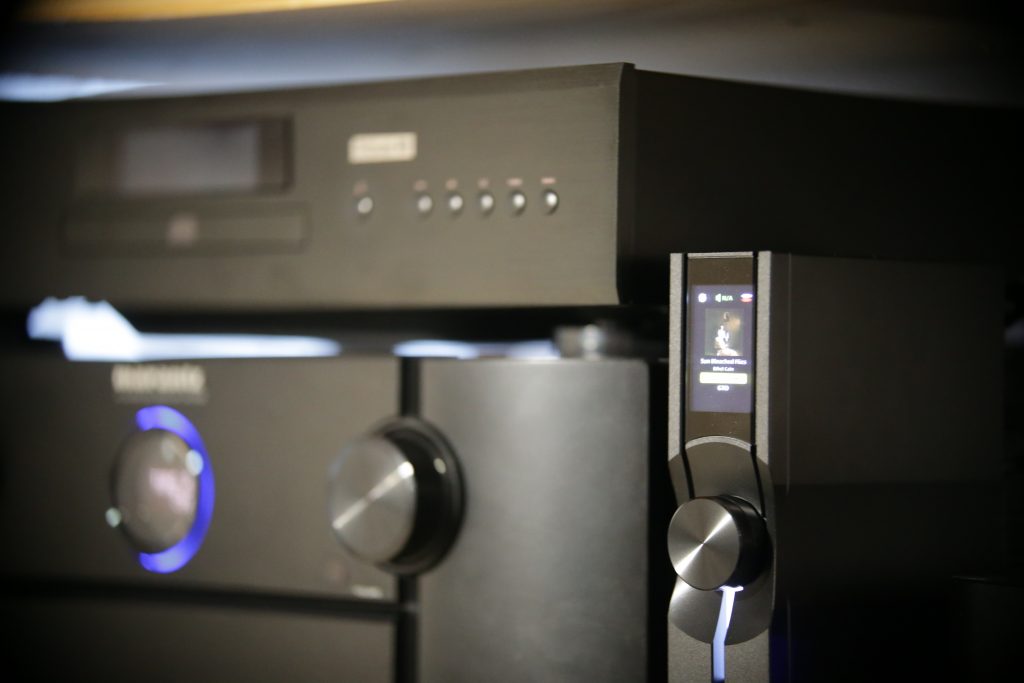
I initially hooked up the Neo Stream 3 to my Torc DAC from Geshelli. After a while of listening that way, I switched to the analog output into my Marantz. I want to compare the sound between the two DAC’s and a bit of a spoiler, but I do prefer it with the Torc, though this isn’t a big surprise as I speced out the Torc to be exactly what I wanted. That is not to say the onboard custom Burr Brown isn’t good; it’s extremely good, and this comes down to a matter of taste. My Torc also had a Burr Brown, but Geno did a little something to the implementation to get a different sound out of it, and I really like it.
With the Neo Stream 3 in transport mode, you don’t really get a sound per se as it is sending the pure high-res signal to your DAC of choice and not getting involved unless you choose to apply a filter. So that is to say, whatever your system sounded like before is how it will sound with the Neo Stream 3, outside of any changes in resolution, depending on how you were streaming before. I like this option a lot, as I have built a sound I really like in my system, and having the ability to play my music without any worry about changes in that sound makes me really happy.
Now, when outputting the signal via analog out, you will get a different sound than you may get from a different DAC, and that is not to say it is a good or bad thing, but every piece of gear will sound a little different, even two identical DAC chips can sound different when implemented differently. I thought the Neo Stream’s onboard DAC sounds great. Overall, it is not quite as warm as the Torc with the Burr Brown. I would say it is very close to neutral, if not a tiny bit bright. I notice a little more in the highs, but no issue with sibilance. Though you can warm up the sound with the JVC K2 turned on, which helps with some of the harmonics. The midrange is clean and clear with all the detail you would expect from a Hi-Res system. There is a little less low-end than with the Torc, but this is easy to adjust back in for my taste with my sub’s levels. I wouldn’t say it lacks low-end, but I like a warmer sound.
As for streaming, I used both Qobuz and Spotify High Res, as some of the music I like to stream is not on Qobuz. Comparing the same tracks, Qobuz does sound better than Spotify’s High Res, though they really did close in with the release of High Res last year. In both cases, the connect feature worked well and had very little latency when pausing or switching tracks.
I played some Against Me, specifically, one of my favorite tracks is Thrash Unreal, which came out when I was in High School and was on loads of my mix CDs. Then 17-year-old me would have never imagined listening to it like this. The Neo Stream pushing out the analog signal delivered a crisp sound, with loads of detail. Imaging of the instruments was clear and 3-dimensional with good depth. The Neo Stream handles fast attacks very well, which, if you listen to alot of punk or rock, will be important to you. To add to that, due to the low noise, transients are crystal clear, especially on good recordings. The track’s vocals sound extremely good; the whole of the midrange is well represented by the built-in DAC.
To switch it up to something more instrumental, I played Levi The Poet’s “Shores and The New World (Instrumental)”. This track is actually a backing for a part of a story he wrote, which is really good, though on its own, the spoken word lyrics won’t make as much sense, so if you’re interested, I highly recommend playing the whole of “Corespondence (A Fiction)”, though that version is only on Spotify. The Instrumental can be found on both Spotify and Qobuz. The track starts with a piano and violin in opposing channels, then builds with each bar adding in another instrument. The track has immense depth, and I have listened to it on systems from a couple of hundred-dollar headphones to many-hundred-thousand-dollar YG speakers. It manages to sound good regardless, and with the Neo Stream 3, it kept on that track. The drop towards the end is powerful and has the depth and detail to really allow it to have the impact it deserves. This is a track that needs to be played loud, and the Neo Stream 3 doesn’t break up or distort; it just delivers.
At no point while listening to the Neo Stream 3, using its built-in DAC, or sending the signal to my Torc, did I feel as though it was out of its depth. This is a streamer that I feel as though would feel at home in just about any level system, while also having the capability of being its own system for headphone users. Speaking of which, the built-in headphone amp is a pretty nice add-on. I don’t know that it sounds quite as good as some of iFi’s higher-tier headphone amps, like the iDSD Pro, but for an all-in-one desktop headphone rig, you won’t be disappointed, especially having a balanced output.
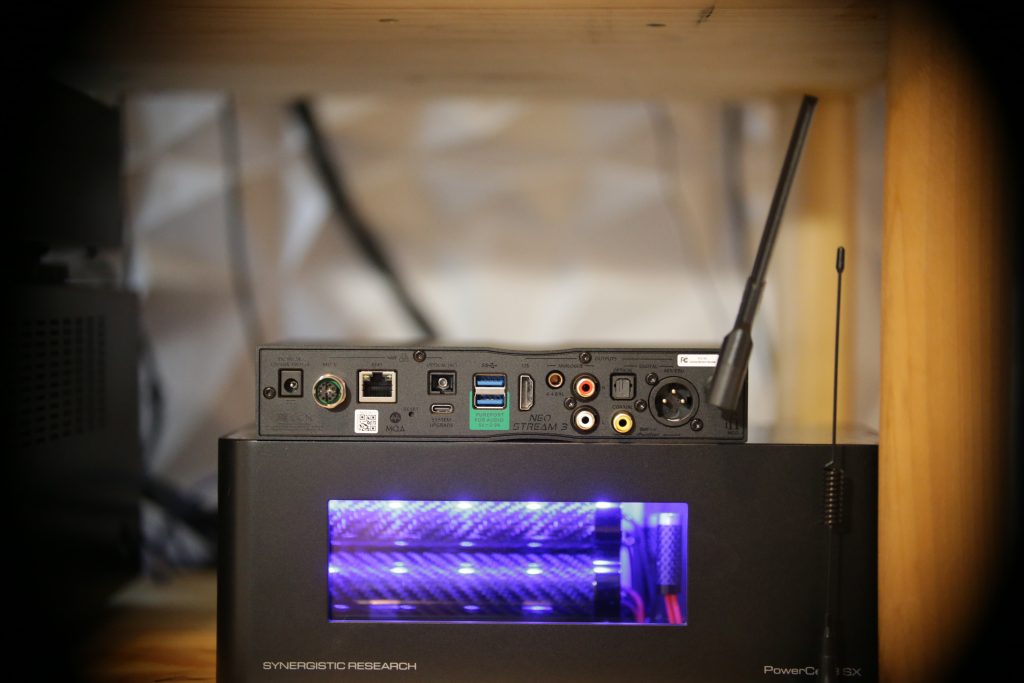
Specs:
| ANALOGUE OUTPUTS | 4.4mm Balanced, SE RCA |
| ANALOGUE OUTPUT VOLTAGE | Balanced 4V RMS; SE 2V RMS |
| DIGITAL INPUTS | Wi-Fi; Ethernet (RJ45, M12-X, Optical); 2x USB-A; USB-C (front) |
| DIGITAL OUTPUT | 2x USB-A; S/PDIF Optical; S/PDIF Coaxial; AES/EBU; I2S |
| DIMENSIONS | 214 x 151 x 41mm (8.4 x 5.9 x 1.6”) |
| HI-RES SUPPORT | 768kHz PCM; DSD512 (22.6MHz) |
| LIMITED WARRANTY | UK and US – 12 months* EU – 24 months* |
| NET WEIGHT | 1.0 kg (2.26 lbs) |
| OUTPUT IMPEDANCE | Balanced ≤74Ω; SE ≤37Ω |
| POWER CONSUMPTION | ≤0.5W idle; 14W max. |
| SNR | ≥106dBA @ 0dBFS |
| SYSTEM UPDATE | USB-C (back) |
| THD+N | ≤0.0025% @ 0dBFS |
| POWER SUPPLY REQUIREMENT | DC 9V/2A; 12V/1.8A; 15V/1.2A (centre +ve) |
Price: $999.00 U.S.
Associated Equipment
- Marantz SR7009 (preamp)
- Geshelli Torc DAC
- Sonus Faber Sonetto V
- YG Cairn
- Opera Grand Mezza V2
- Starke Sound Beta5
- Mcintosh MC250
- Advance Paris X-A160 Evo
- Paradigm V8 Sub
- Starke Sound SW15
- Full Synergistic Research Foundation Loom
- Synergistic Research Powercell SX
Conclusion
Streamers are an essential piece of any modern Hifi System, and they can very in price from a couple of hundred to tens of thousands of dollars. It can be daunting picking any piece of gear for your system, but I feel like streamers are especially hard, as it seems like all of them essentially do the same thing, so how much should you spend? My general advice is always to buy the best thing you can afford, for a couple of reasons. You are less likely to feel the need to upgrade, and usually, higher-end gear lasts longer. That said, there are certainly diminishing returns. The Neo Stream 3 is at an excellent price point for streamers, where you are getting a ton of performance without paying a bunch just for a logo. The built-in DAC sounds great, and the connectivity is great too. Also, I can not stress how important after-sales support is and how good iFi’s is. When you build that into the cost, you are getting a bargain. I loved my time with the Neo Stream, and if you are wondering, do you need a streamer, vs something like a Bluetooth endpoint, let me say this: the Neo Stream 3 sounds better than my McIntosh MB25. You also don’t have to worry about any sound your phone or computer ever makes, then also playing to your device. Having your streamer handle all the sound and just using your phone as a remote is a much better scenario. For around a thousand dollars, I am not sure it gets better.
For more information, click the link below:


Disclaimer:
iFi Audio supplied Hifi Chicken with a demo unit of the Neo Stream 3 for the purpose of this review; iFi Audio nor any affiliate paid in full or in part in exchange for this review