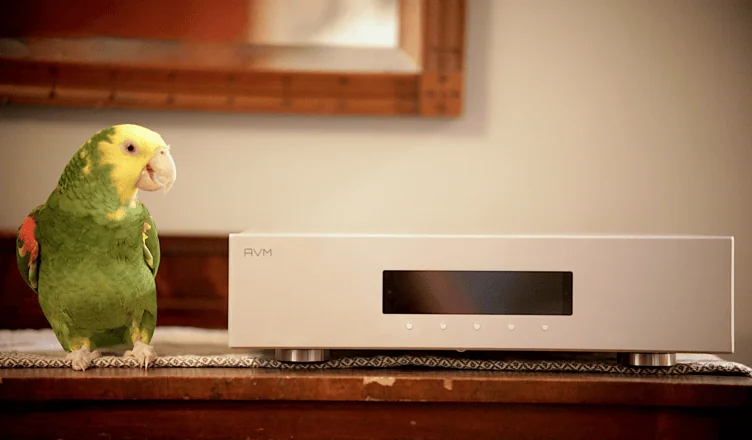
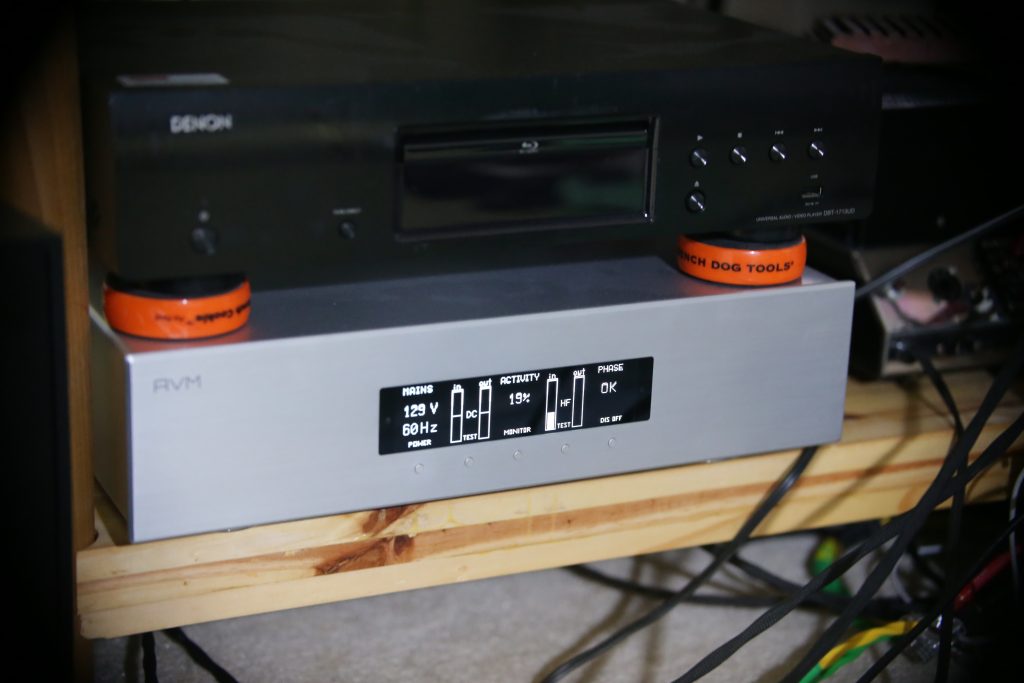
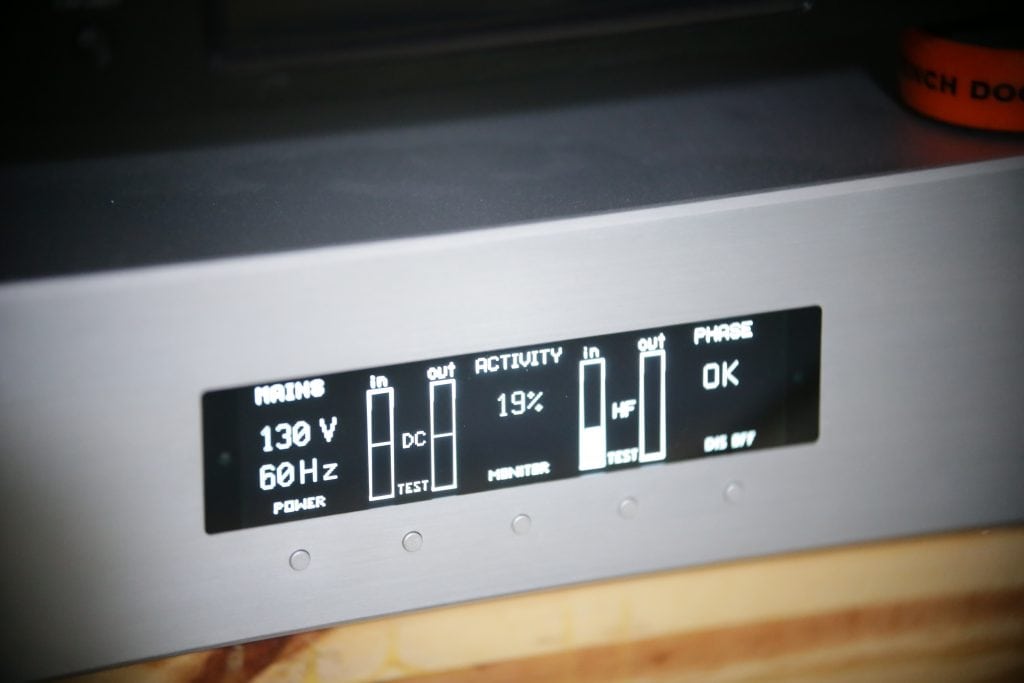
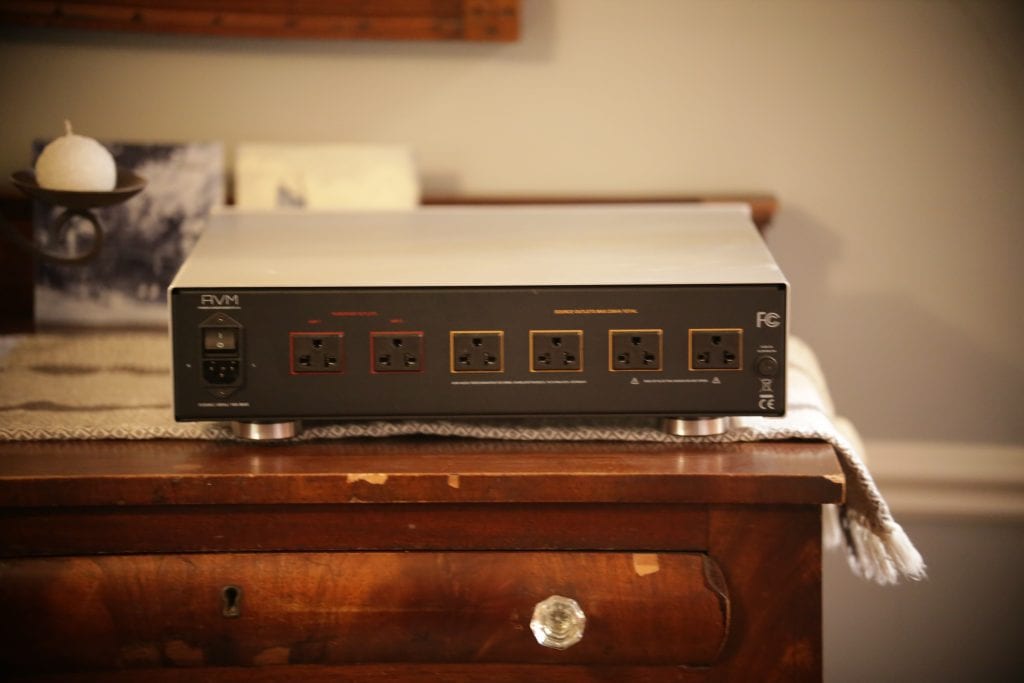
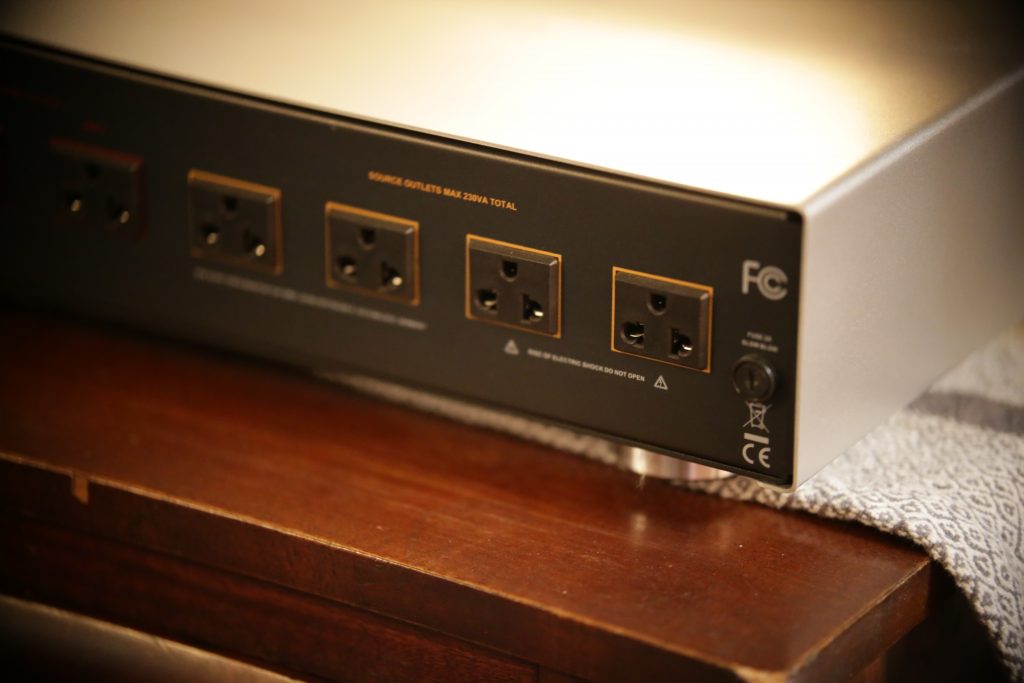
One of the pieces of gear that came back with us from Capital Audiofest is the AVM PC 3.3 Power Conditioner. This is a relatively new product, released in the spring of 2024, and promises to be one of the highest-tech power conditioners on the market. One of the most immediately noticeable features that you don’t find on a ton of power conditioners is the screen on the front showing the current power draw and filtering. You can also test the filters in real time with a button on the front panel to make sure everything is working as it should. On the back, you will find 6 outlets, the power input and fuse, 2 of the outlets are designated for high current devices like power amps, and the other four are designed for preamps/sources. So how much for all this tech? The PC 3.3 comes in at a retail price of $5,999.00 U.S. So, is it worth the cost, and does all the tech add up to better sound? Let’s take a listen and find out.
Setup
Setup is fairly straightforward, as there aren’t a bunch of settings to go through. Once you have it unboxed, you are ready to start plugging in your devices, being sure to plug power amps, including subwoofers, into the high-current outlets. Plugging high-draw devices into the other outlets may lead to a blown fuse, ask me how I know. I had grabbed the wrong power lead for the Starke SW-15, which was plugged into one of the lower output outlets and on a track with a heady drop, well, the power cut. Luckily, after swapping the power to the correct outlet and one new fuse later, there were no more issues. Once you have all your devices plugged in, you are ready to switch it on. Pressing the power button, you will get a message that it is checking the mains source, and then it will power on your devices in a one after the other sequence, so don’t panic if one thing comes on before another. After everything is on, you are good to listen. You can also try the filtering buttons to run a test and A/B test the functionality of the filters.
Sound
Sound is an interesting quality to discuss with something like a power conditioner, as it really shouldn’t have any sound. That said, they absolutely can affect the sound of all the gear plugged into them, and hopefully in a positive way. The main goal of any power conditioner, or at least all the ones I have used, is to reduce any noise being introduced to the system via the mains power. In many houses, there can be a bunch of different loads on a given circuit, and some of those loads can have feedback into the circuit. This can be especially bad with older appliances, for example, any time the washer was running, I would get an audible 60hz hum from my speakers while listening. I was able to eliminate it with a power conditioner, my AudioQuest PowerQuest 3, and haven’t run my system without a conditioner ever since.
Not all power conditioners are built equally. My PQ 3 is a decent piece of gear for the cost, but it’s not perfect, it didn’t eliminate all noise in my system, while it did improve the sound, there were still improvements to be made. I currently run a Synergystic Research Powercell 8 SX, which has made my system silent. I used to still get a little noise out of my old MC250, but that disappeared with the Powercell 8SX. So now with the PC 3.3 in my system, how does it sound? It is dead silent at idle, no noise whatsoever. This is the basis for good sound, the foundation on which everything else is built. If you have static or feedback coming through the power, you won’t be getting the best out of your system.
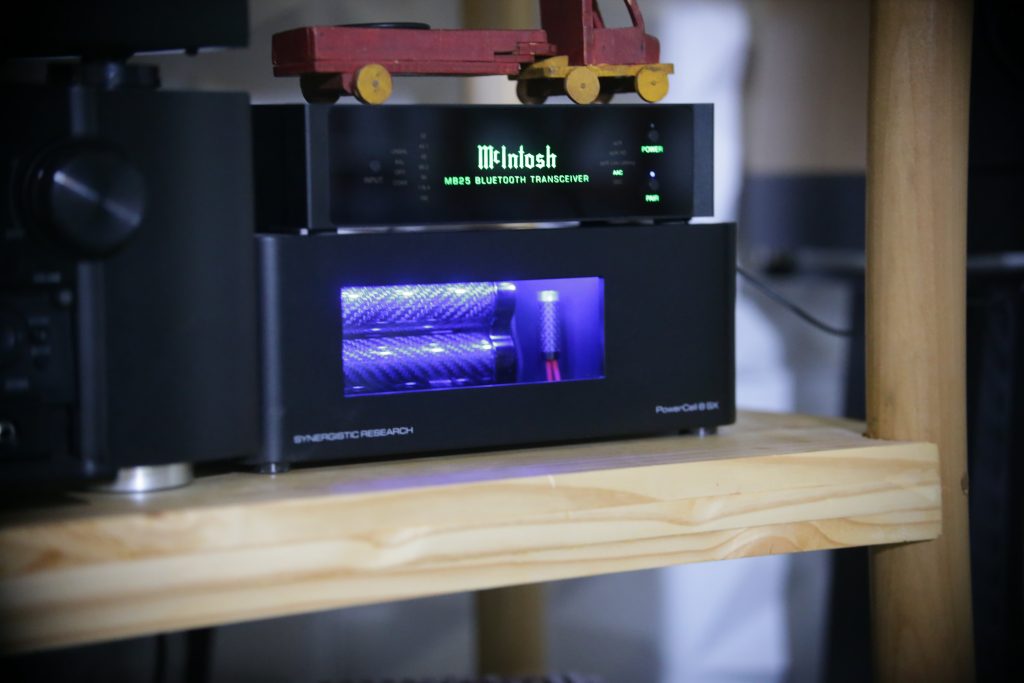
I compared the PC 3.3 directly with the SR Powercell 8 SX as they are fairly comparable in price, though they address power conditioning in different ways. I started with everything plugged into the PC 3.3 and listened to various music, via streaming, CD, and on the Forever Model 1 with the Avenger Phono. I would play a piece on the PC 3.3, then switch everything over to the Powercell 8 SX. I also tried a combo of the two with different gear. The differences between the two are not exactly night and day, but rather subtle. They are both excellent pieces of gear, so one can expect good results from both. One of the differences I noticed was that the Forever Model performed better when powered through the AVM. There was less noise in the background of the tracks on Ethel Cain’s “Preacher’s Daughter”. With my Rotel CD-11, it sounded about the same to me on either power source. I also recently picked up a McIntosh MB25 Bluetooth transmitter that supports high-res Bluetooth streaming. It is one of those devices that can be extra susceptible to bad power with a wall wart-style power supply. It sounds cleaner and clearer in both the PC 3.3 and Powercell 8 SX as compared to the wall directly. However, it performed a bit better plugged into the PC 3.3. What about power amps? Well, I will say I think I prefer the sound I get when they are plugged into the Powercell. It seemed to handle the power draw a bit better and keep my amps fed a little better. That said, I would be more than happy to have the AVM as my power conditioner; nothing it does is done poorly. We are talking about minute differences between two great products.
I was curious about how the AVM compared to my PowerQuest. I didn’t originally plan to compare the two as they are in wildly different price brackets, the AVM costing about 10 times as much. But I was thinking you know, people start somewhere, and maybe at the point now of wanting to get a power solution that matches the level of their equipment now. I am that very person; my gear has grown to outpace the level of conditioning the PowerQuest can really offer. You may not notice the limitations on less resolving equipment, but as the rest of your system grows and the precision of the electronics gets better, you may start to notice some of the system noise you hadn’t previously heard. I found this to be most true when I got my VPI Prime and used it with the Avenger Phono. My analog front end got to the point where the playback was so clean that I could hear a bit of system noise come through that I never really picked up on my AT LP-7. So how do they compare? Simply put, they don’t. The filtering in the PC 3.3 is much better than the PowerQuest, and we expect that. It’s not that it is 10 times better either, but instead, the PowerQuest is just not good enough to clean up the power on my system, and the PC 3.3 is. I have no audible underlying noise at my listening levels. If you have thousands of dollars of gear or, in many cases, 10’s of thousands of dollars of gear to plug in, you owe it to yourself to plug it into something that is up to the level of your system.
Pros and Cons
Pros:
- Good build quality
- Great Filtering
- Screen with live view of power
- A/B testing built in
Cons:
- Would like it if all outlets were high current
Specs:
MAINS CONDITIONING
● DC filter directly at the device input of the power
conditioner removes unwanted DC components
from the mains supply, effectively eliminating
mechanical transformer hum.
● The individual HF mains filtering with common
mode chokes and film capacitors is designed
separately for each connection and effectively
suppresses mutual interference between the
connected devices.
● Crosstalk between the connected devices is
efficiently suppressed
SAFETY
● Active phase detection at the input: Activation of the outputs is only possible if PE (protective earth) is
connected and the mains phase is correct, otherwise an error message is shown on the display
● Overcurrent protection for N and L against PE
(protective earth)
● RCD circuit breaker can be operated for resetting on the underside of the device (residual current protection, overcurrent protection), if triggered, the message
appears on the display
● Low power outputs for source devices are additionally protected by externally accessible fuses
● Overvoltage protection against up to 6000 A in 30 msec
DISPLAY
● 256 x 64 white graphic OLED, can be switched off
● Mains phase OK / NOT OK
● Mains frequency 50/60Hz
● Continuous measurement and display of the mains voltage
● Continuous monitoring of the power quality on DC in/out,
displayed as a bar graph
● HF components are measured and
continuously displayed (bar graph)
● Numerical display of conditioner activity (0-100%) shows
the current load on the correction circuit
● Acoustic display of the activity via a sound transmitter
(acoustiliser), can be activated as required for control purposes
● Demo buttons for DC and HF: Bridges DC filter and HF filter for
direct listener comparison
OPERATION
•Conditioner activity is shown in the display (0-100%)
•Conditioner activity is also displayed acoustically when a button is pressed
•The applied power quality is continuously analyzed and displayed (mains voltage & frequency,
DC offset, HF)
•Operation of all functions via 5 buttons below the display
•ON / STANDBY can be operated via AVM RC3 or RC 5: Connected devices are switched on with a time delay. The IR sensor can be deactivated if the remote control option is not required
•Power down sequence via remote control: Power down is delayed so that settings of the
connected devices can still be saved
•Resettable RCD (residual current device) under the device (easy to feel)
•Main power switch on the rear panel (mains switch)
OUTOUTS PC 3.3
● 2 Power Outlets belastbar bis 16A für Voll- und Endverstärker
● 4 Low-Power Outlets belastbar bis 2A für Quellgeräte separat abgesichert (zugänglich auf der
Geräterückseite)
● Outputs are switched sequentially (Low-Power / Power1 / Power2) to limit inrush currents, this
prevents unintentional tripping of the house fuses
Price: $5,999.00 U.S.
Associated Equipment
- Marantz SR7009 Preamp
- VPI Avenger Phono
- VPI Prime with 10″ Unipivot arm on VTA base with Ortofon Quintet Red and Shyla Cartridges
- VPI Forever Model One with Fatboy 12″ with Shyla Cart
- McIntosh MB25 Bluetooth Transceiver
- Sonus Faber Sonetto V
- YG Cairn
- Paradigm Defiance V8 Sub
- Starke Sound SW-15
- MC Audiotech TL-8
- Mcintosh MC 250
- Onkyo M5140
- Synergistic Research Powercell 8 SX
- AVM PCM 3.3
- Synergistic Research Foundation SX cabling
- Synergistic Research Foundation Power Cables
Conclusion
I really like the AVM PC 3.3, it is a wonderful power conditioner that comes in at a somewhat reasonable price of around 6 grand. I know it sounds like a lot for just power, but for the right customer, it pales in comparison to the gear they are plugging into it. It offers protection to your delicate electronics as well as a pure signal to power them. Blocking noise from the start is the best way to keep your system perfectly quiet, though it can not protect against gear that is creating noise after the power supply, which usually indicates an issue internally. It will stop any noise from getting to them from your outlet. In my system, it performed extremely well, and as long as you don’t have more than a couple of high current pieces of geat it will likely do the same for you. In the event you do have multiple amps and subs you want to plug in, you can get the big brother, the PCM 5.3, which has 4 high current outlets and 4 regular outlets for sources. If you have some power noise you can’t tame, I recommend checking out one of the AVM PC series power conditioners for audition in your system.
For more information on where to buy and about AVM, click the link below
For American Distribution, click the link below
If you’re in the Northeast of the U.S. Click the link below for The Listening Room


Discalimer
AVM U.S. Distributor Fidelity Imports provided Hifi Chicken with a demo PC 3.3 for the purpose of this review; AVM, nor any affiliate paid in part or in full in exchange for this review.