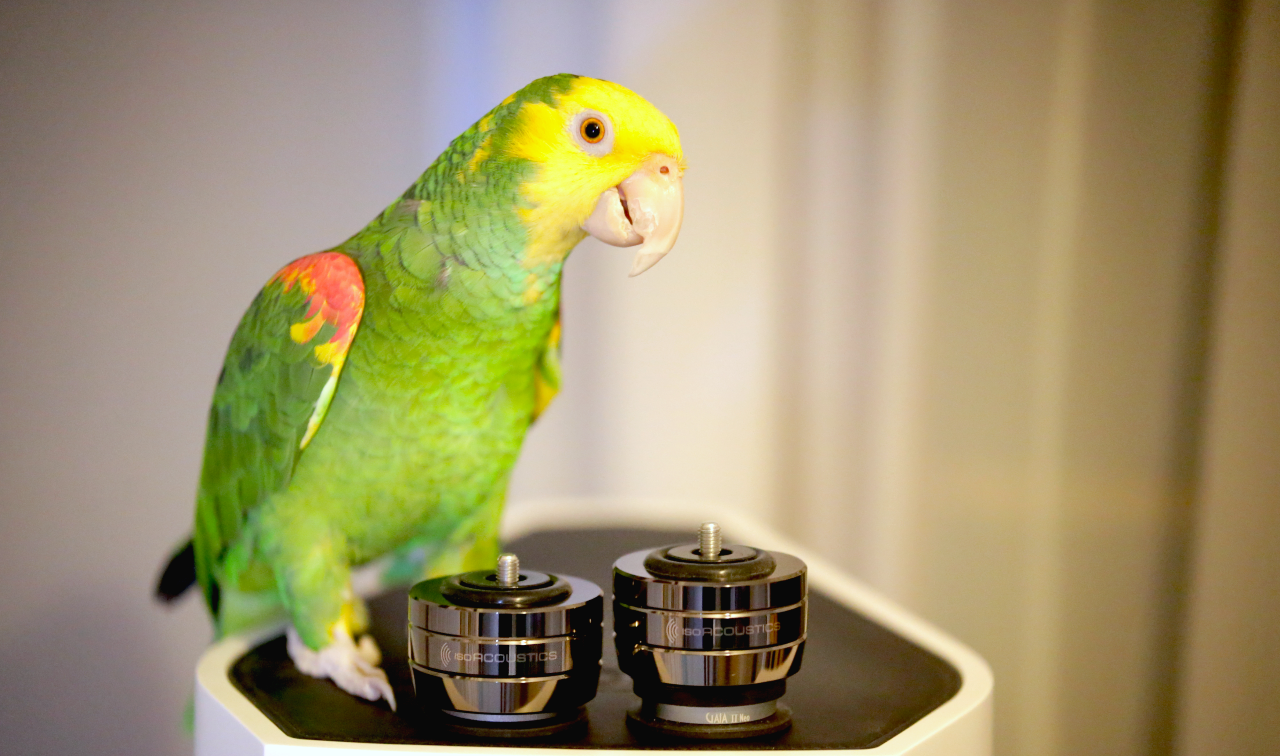
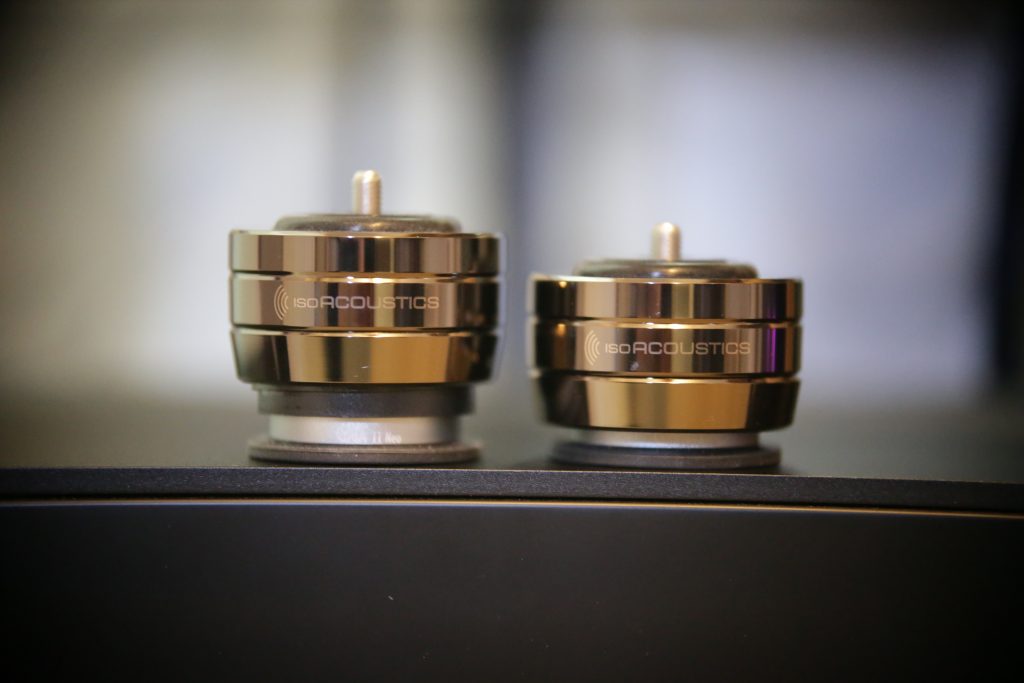
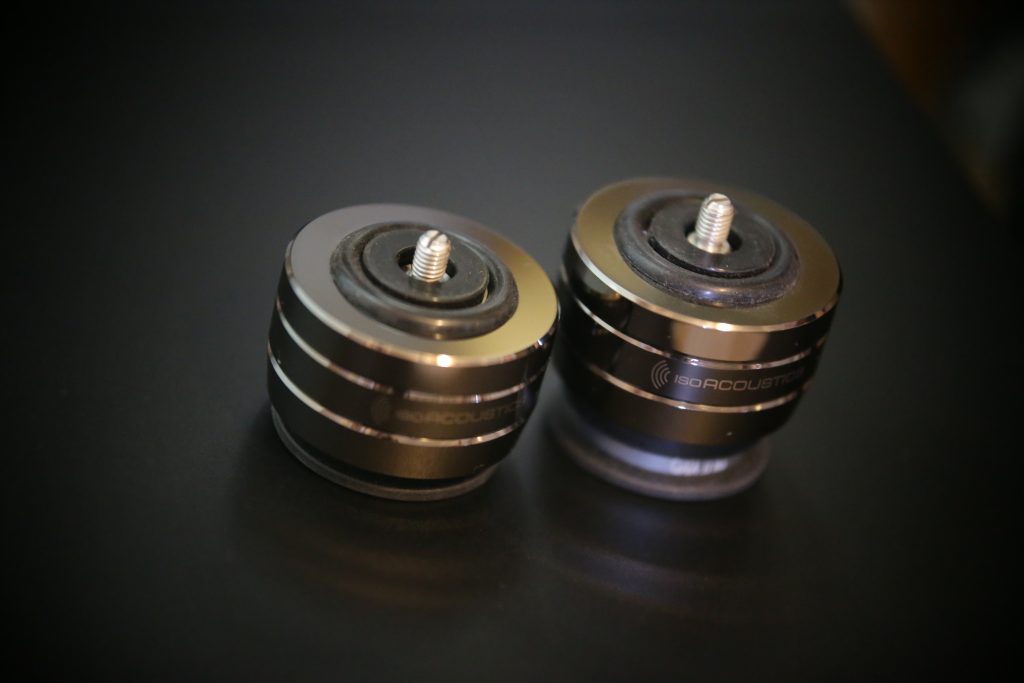
Every year, we tend to come home with a car full of gear from Capital Audiofest, and this year was no different. One of the smaller things we brought back for review was a set of Iso Acoustics Gaia II Neo feet. We got to experience a really cool A/B demo at the show with two pairs of identical speakers, one set with Gaia feet and the other on the stock spikes. I was very impressed with the demo. With my eyes closed, I was able to reliably pick which pair had the Gaias on them and knew I needed to do a full review. These feet offer a lot of performance gain, for honestly, a fairly small price. The set I have, the Gaia II Neo, which runs $299.99 for a set of four, so $600 for enough for a pair of speakers. The Gaia feet are a very easy way to get better bass and a clearer sound, so let’s get into what they can do for you.
Setup
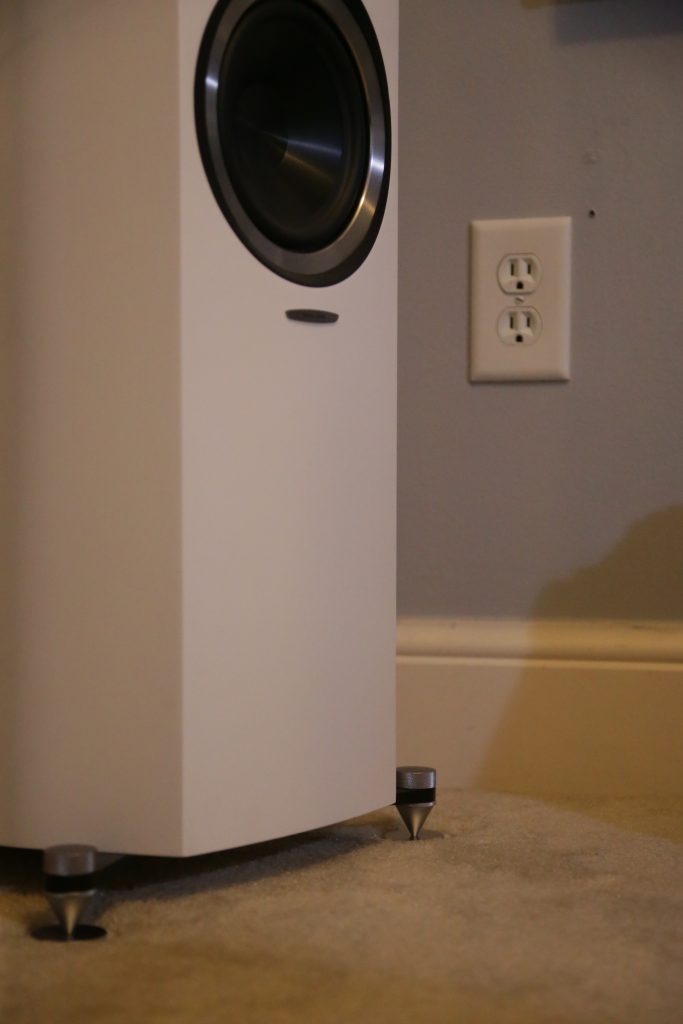
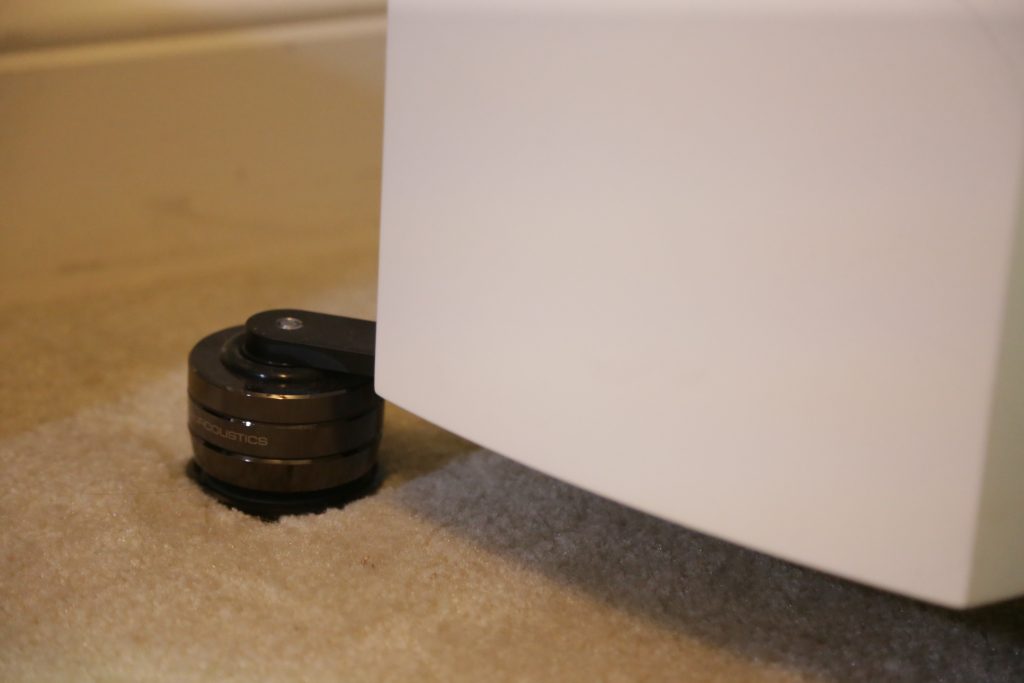
Setup is pretty easy, though if you have really heavy speakers, you will likely want a second person. I just tilted my Sonus Fabers back and took the front spikes off, and screwed on the Gaia II Neo feet. Then tilted them forward and did the back two. You screw them on until they are snug and the Iso Acoustics logo is facing forward. Then you can adjust the height by turning the bottom of the foot. No lock nut or screwing in bit by bit and tightening to get your speakers level. If you have carpet, you can order the spike cups to let the foot sit in to get a really solid foundation. They come in a range of sizes for different weights, so look up the weight of what you are putting them on and also check the tread size and pitch, so you can order the correct set. Once have everything snug and leveled out, you are good to start listening to music.
Sound
When it comes to audio accessories, sound can be difficult to discuss, as feet, spikes, and racks don’t really have a sound, but with the Gaia II Neos, they have a direct effect on how your speakers sound. As audiophiles, we tend to look for accessories and gear that can affect the sound, and certainly not all of them do; some serve a more utilitarian purpose, like holding our records, or what have you. So if you are after a fairly affordable way to get better sound or maybe just eak out that last bit of performance, the Gaia Neos may be the ticket. Once installed, I think the most dramatic difference is in the bass; it tightens up, becomes cleaner, and more articulate. My Sonetto Vs have good bass to begin with, but that doesn’t mean there was not room for improvement. I did wonder if part of what I was hearing was that they say a bit higher off the carpet with the Gaia Neo than with the stock spikes. They are ported through the bottom, so raising them would have an effect on the bass. To test this, I put pucks under the spikes to get them as close as possible to the same height as the Gaia Neos, and there were some similarities in the bass, as in both cases the woofers seemed to breathe easier and have more output; the clarity was not on the same level.
Bass is not the only thing that benefited from the Gaias, so simply raising my speakers would not net me the same results overall. It is certainly worth noting that speakers with rear/front or no ports at all wouldn’t see that same result anyway. The mid-range also gained clarity and detail, though not as dramatically as the bass; it is noticeable. High frequencies seem to be affected the least, which makes sense with what the Gaias are doing; they essentially dampen the speaker like a shock absorber. Lighter vibrations will have less of an effect and be affected less. It is worth mentioned ther is also the side effect of fewer vibrations being transferred to your floor and subsequently to other gear in your room.
To test the difference in bass response, I had to play a few of my favorite bass-heavy tracks. The first is a really wubby dub step track called “Mellow Man – VIP” by Distinctive Movtive. It goes very low and can easily overwhelm a system that doesn’t have control over the bass. It’s a hard song to descibe but it’s a pretty fun track with a lot of different sound effects, and when turned up has literally rattled records off the wall. With the Gaia Neos, the bass from my main speakers was much cleaner and less flabby-sounding. I also played “Northend Nightlife” by Headphone Activist, and the bass response was spectacular. The clarity continues to impress me; you get better depth and a more defined sound stage.
I put the OEM spikes on one of my Sonus Fabers and left the Gaia Neo IIs on the other to see how perceptible the difference between channels was. I have to say it is not as subtle as one might expect for such a small change to the system. The left channel (with Gaia II Neos) was so much tighter and defined, with an overall clearer image and soundstage. The Gaia Neos are one of those upgrades that have no downsides; you install them and get better sound throughout the frequency range, and help isolate the rest of your gear from vibrations. Usually, with anything, there is a trade-off, you get this, but have to give up something else. The only thing I can think of that may be a downside is that, depending on how tall your OEM feet are, these may be a bit taller, raising the tweeter position. They do raise my Sonus Fabers up about a centimeter over the OEM Spikes. I will say I prefer it, though, as it opens up the bottom port and really helps in bass response. I have actually raised my speakers on the OEM spikes to match the height I got from the Gaia II NEOs.
Specs:
For floor standing speakers and subwoofers weighing 121 lbs (55KG) or less.
Size
2.6” / 65 mm (W) x 2.0” / 50 mm (H)
Height Adjustment
0.34” (8.5mm)
Thread
M8-1.25, M6-1.0 and ¼”-20
Associated Equipment
- Marantz SR7009 Preamp
- VPI Avenger Phono
- VPI Prime with 10″ Unipivot arm on VTA base with Ortofon Quintet Red and Shyla Cartridges
- VPI Forever Model One with Fatboy 12″ with Shyla Cart
- McIntosh MB25 Bluetooth Transceiver
- Sonus Faber Sonetto V
- Paradigm Defiance V8 Sub
- Starke Sound SW-15
- Mcintosh MC 250
- Onkyo M5140
- Synergistic Research Powercell 8 SX
- AVM PCM 3.3
- Synergistic Research Foundation SX cabling
- Synergistic Research Foundation Power Cables
Conclusion
I can’t say enough good things about the Gaia Neos; they are a fairly affordable way to get better sound out of any floor-standing speaker. You can pick which you need based on weight, and they are a breeze to set up and enjoy. Very few things I have tested have worked as well and as easily as the Gaia II Neo has. I don’t know of many other upgrades for 600 dollars that will get you the same results. They squeeze out any leftover performance your system may be leaving on the table. If you have your system pretty much dialed in and are looking for a bit more without breaking the bank, I recommend trying these out on your system to hear the difference they can make.
For more information on where to buy, click the link below:
https://isoacoustics.com/home-audio-isolation-products/gaia-neo-series


Discalimer:
ISO Acoustics provided Hifi Chicken with a set of Gaia II Neos for the purpose of this review. ISO Accoustics, nor any affiliate, paid in part or in full in exchange for this review.